Imagine investing in a premium landscape or pool project in Ontario, only to face costly delays or unexpected change orders. For homeowners, architects, and builders, these challenges are all too common as the 2026 market brings new regulations and higher expectations.
This guide is designed to demystify the project model in project management, showing how it can protect your investment and streamline even the most complex outdoor and residential builds. By understanding how a project model in project management works, you can reduce risk, clarify responsibilities, and avoid budget blowouts.
We will cover what a project model is, break down its essential components, compare different types, and provide a step-by-step approach to implementation. Real-world examples from Ontario’s top-tier projects will illustrate how early planning, detailed drawings, and precise sequencing deliver better results.
Ready to avoid delays and protect your design intent? Let’s explore how the right project model ensures your vision comes to life—on time and on budget.
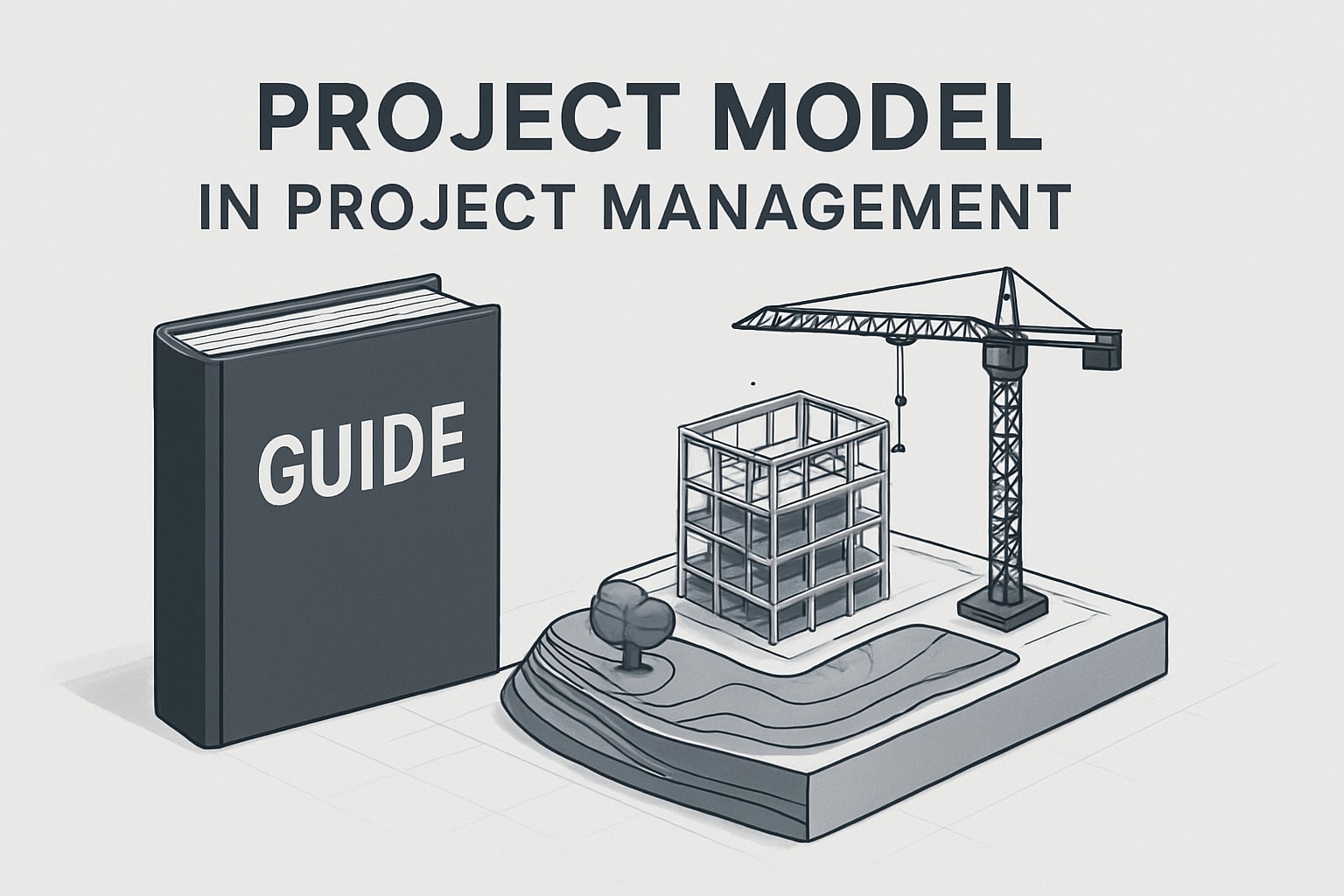
A project model in project management provides a structured approach to organizing, planning, and executing complex construction and landscape projects. In the context of Ontario’s premium residential and outdoor builds, this model serves as the backbone for managing every detail—from scope and scheduling to quality control.
Unlike methods or artifacts, a project model sets the overarching framework that guides decision-making, whereas methods are the specific processes, and artifacts are the outputs like construction drawings. For high-value projects in the GTA, a robust project model is crucial. It reduces risk, clarifies responsibilities, and protects the homeowner’s investment, especially when navigating Ontario’s intricate permitting and regulatory environment.
Today’s project model in project management is no longer a rigid formula. The PMBOK® Guide – Eighth Edition outlines a shift toward flexible toolkits that adapt to each project’s unique needs. For example, when coordinating a GTA estate’s pool installation, grading, and landscape sequencing, a tailored project model ensures every phase aligns with local by-laws, prevents costly delays, and maintains quality from start to finish.
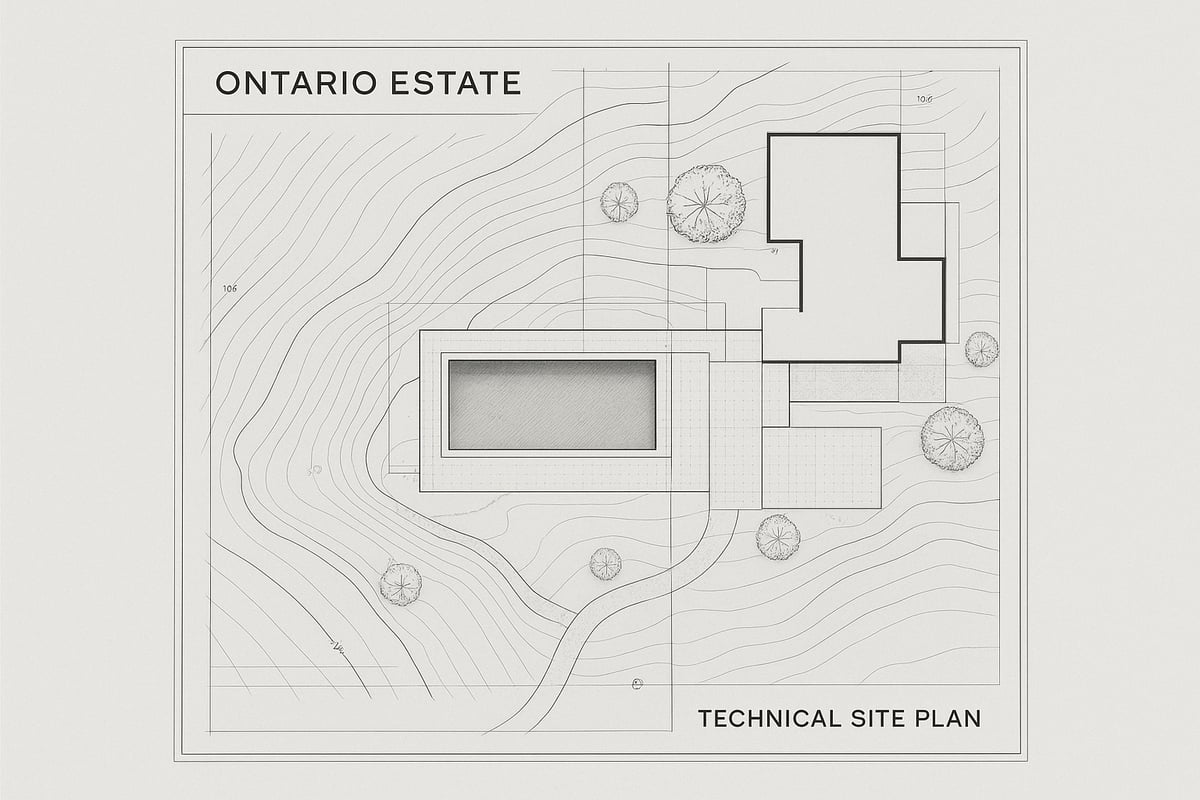
Delivering a premium landscape or pool project in Ontario means getting every detail right from the outset. The project model in project management serves as the backbone for these builds, ensuring each phase is mapped, budgeted, and sequenced with precision.
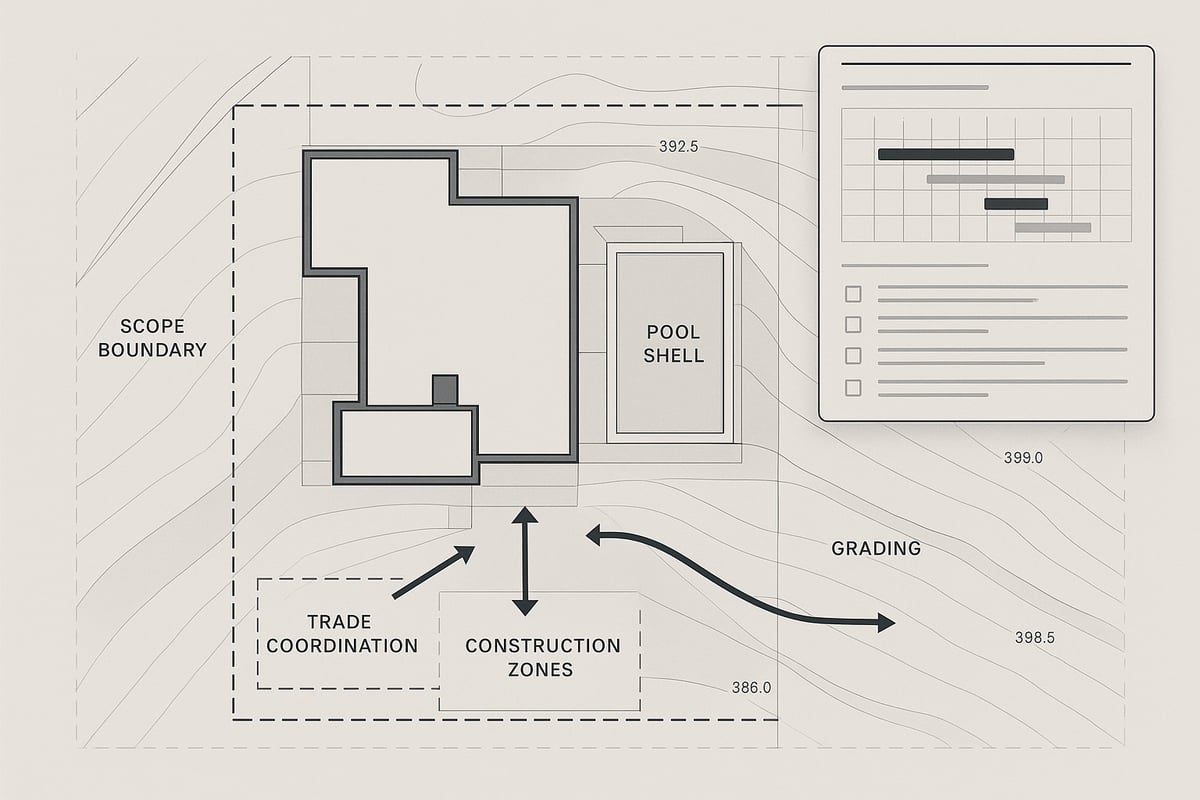
A robust project model in project management includes several critical components:
| Component | Ontario-Specific Focus |
|---|---|
| Scope Definition | Aligns with municipal by-laws |
| Scheduling | Considers grading, weather, seasons |
| Budgeting | Accounts for trade premiums, contingencies |
| Resource Allocation | Manages specialized contractors |
| Quality Control | Ensures construction drawing compliance |
Construction-ready plans and detailed construction drawings are essential. These documents anchor the project, guiding every trade and phase. In Ontario, coordinating trade tendering and sequencing is vital for avoiding site congestion and meeting local approval timelines.
Early planning and stakeholder alignment are the foundation of a successful project model in project management. By mapping out every step, from excavation to pool installation and landscape finishing, teams prevent costly change orders and budget overruns.
Digital tools, such as Gantt chart software, now outperform manual methods for tracking dependencies and timelines. For example, a comprehensive schedule model details when excavation finishes, the pool shell is set, and landscape work begins, ensuring seamless transitions.
Projects built with a robust model experience fewer delays and up to 30% fewer budget overruns, as supported by industry benchmarks. To see how these components unite on complex builds, explore Project management complexity in construction.
Choosing the right project model in project management is crucial for premium Ontario landscapes and pool builds. Different models shape how teams plan, coordinate, and adapt to project realities, especially when high-value investments and regulatory hurdles are involved.
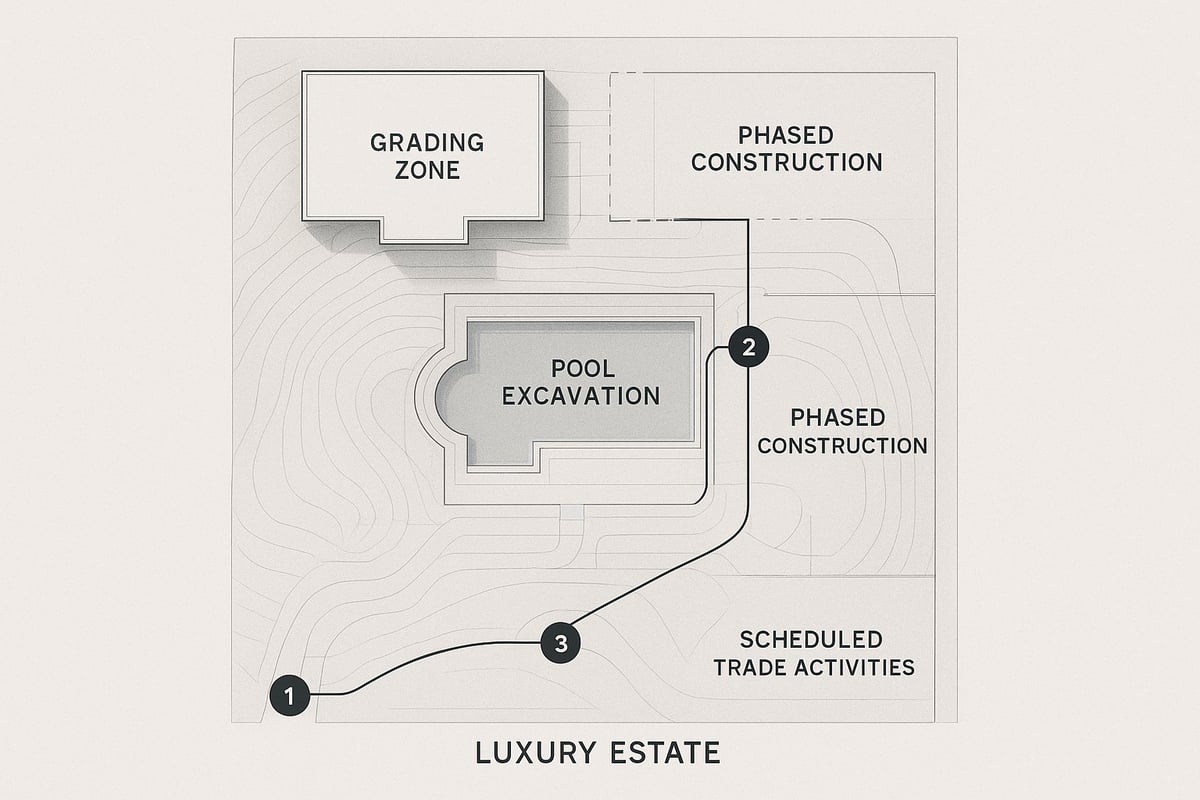
Several models guide construction and landscape projects. The Waterfall model uses a linear, sequential approach, ideal for projects with fixed scopes and few surprises. Agile models offer flexibility, enabling teams to respond to design changes or permit revisions as they arise. Hybrid models combine structure and adaptability, frequently used for complex estates with evolving requirements. Schedule models, often built with Gantt charts, visualize every phase—grading, pool construction, municipal inspections—in one place for all stakeholders to follow. Selecting the best project model in project management depends on project size, complexity, and client priorities.
Ontario’s premium builds face unique challenges: strict by-laws, weather windows, and multi-layered approvals. Hybrid and schedule models excel here, allowing teams to adjust sequencing and manage dependencies as site conditions or municipal feedback change. For example, managing a GTA project might require shifting grading or pool installation to align with inspection availability or seasonal cutoffs. Tools like schedule models simplify complex builds and help clients, architects, and trades visualize progress. For more on how these models streamline pool and landscape projects, see Pools and landscape project strategies. Ultimately, a flexible project model in project management safeguards timelines, budgets, and design intent throughout every phase.
A successful project model in project management begins long before ground is broken. For Ontario’s premium landscapes, pools, and custom homes, every phase requires technical rigor and proactive coordination. Let’s break down the essential steps for 2026.
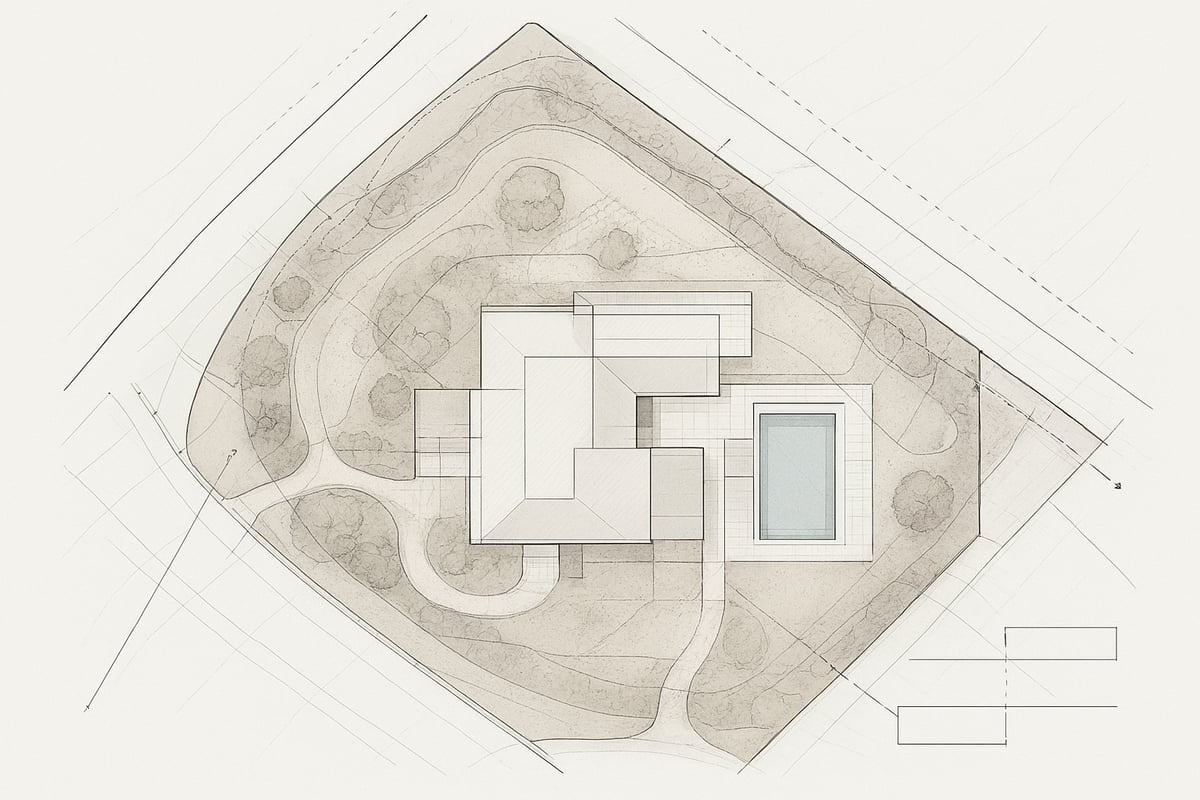
Every effective project model in project management starts with listening. Gather the homeowner’s vision, analyze site surveys, and review conservation, zoning, and municipal regulations.
Collaboration is key. Architects, landscape architects, and engineers must work closely to define project scope and align on priorities. Establish objectives, constraints, and measurable success criteria early. For example, when a GTA homeowner’s dream backyard meets conservation authority rules, early alignment ensures vision and compliance move forward together.
With the vision clear, develop construction-ready plans and detailed technical drawings. Design professionals coordinate layouts, grading, and utilities to meet Ontario’s strict permitting standards.
Municipal approvals can be complex. Sequence permit applications, grading plans, and underground locates to avoid bottlenecks. Common pitfalls include missed submission windows or incomplete drawings, which can delay projects by weeks. Proactive coordination keeps the process smooth and transparent.
The project model in project management continues with precise budgeting and strategic tendering. Prepare detailed trade packages and budgets, ensuring all scopes are clearly defined.
Sequence trades to optimize site flow and reduce congestion. Contingency plans for weather and supply chain shifts are essential in Ontario’s unpredictable climate. For deeper insights on financial controls and sequencing, see Financial and project management insights. Tendering pool, hardscape, and planting phases to specialized contractors minimizes risk and supports premium quality.
In Ontario's premium construction sector, a well-structured project model in project management is the difference between seamless delivery and costly setbacks. Imagine orchestrating a GTA estate build with pools, terraces, and grading, all under tight municipal scrutiny. Here, the project model in project management serves as the backbone, aligning architects, builders, and homeowners from vision through completion.
Robust models create clarity at every step. Early sequencing of excavation, pool shell, and planting prevents costly change orders and delays. Detailed construction drawings and trade coordination ensure no step is overlooked, even when local by-laws or weather introduce new risks. For a deeper look at risk control strategies, see Managing construction risks effectively.
Technology has revolutionized oversight. Gantt charts and scheduling software make progress visible, while digital twins offer simulation-based validation, as explored in Simulation-Based Validation of an Integrated 4D/5D Digital-Twin Framework. These tools enhance communication and keep all stakeholders accountable.
Best practices include regular quality assurance checks, transparent updates, and a post-construction review. Continuous improvement ensures every project benefits from lessons learned, further safeguarding both investment and design intent.
As you've seen throughout this guide, having a clear and adaptable project model is crucial for navigating Ontario’s complex construction environment and ensuring your vision is delivered on time and within budget. If you’re ready to bring clarity, structure, and peace of mind to your next residential or outdoor project, we’re here to help. At Solid Plan, we act as your advocate every step of the way, from early planning and design to seamless coordination and quality control. Let’s turn your ideas into results—Book a Consultation to get personalized guidance for your 2026 project today.