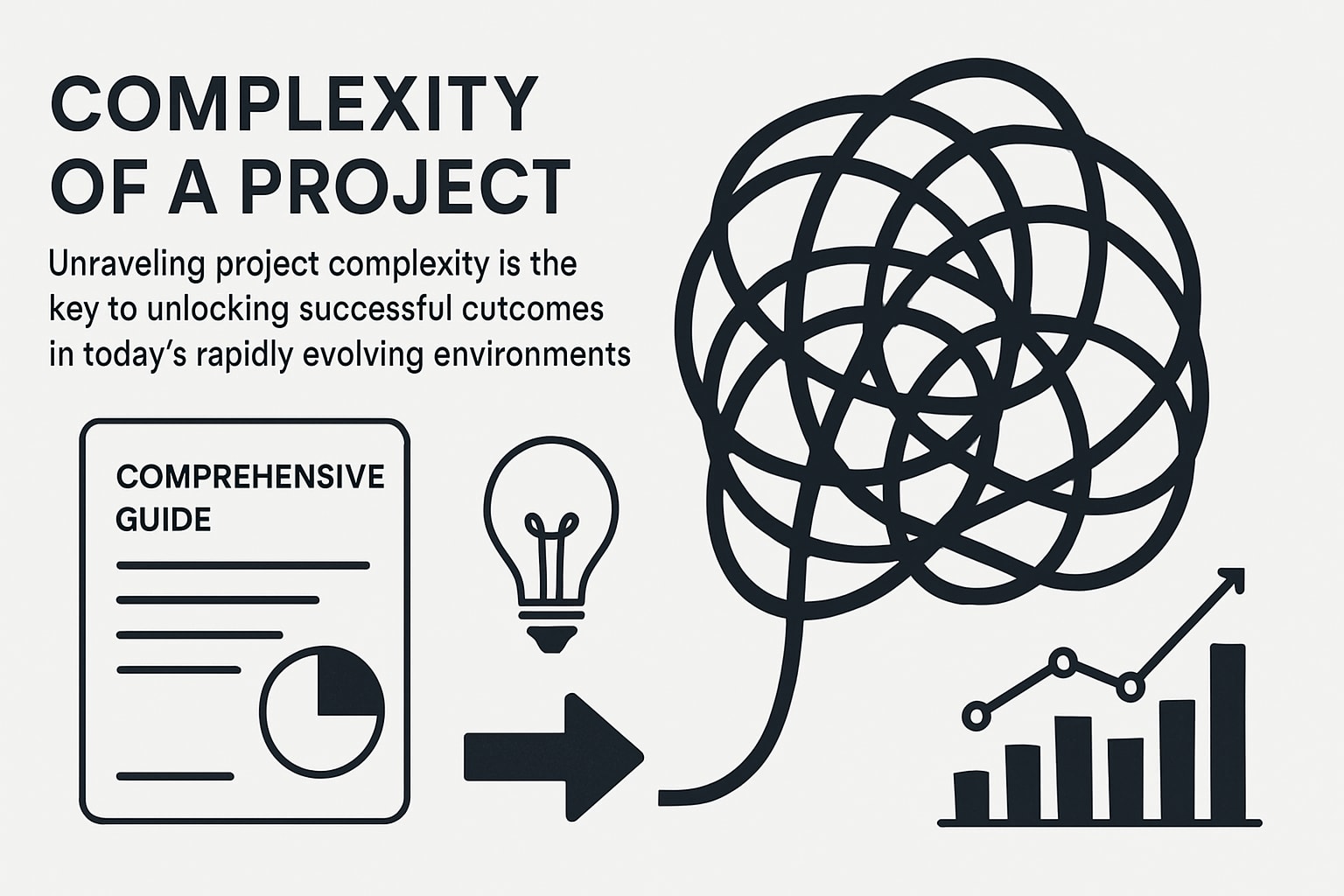
Why do so many projects falter, even with skilled teams and advanced tools? The answer often lies in the hidden complexity of a project. In 2026, rapidly evolving technology, shifting regulations, and diverse stakeholders add layers that challenge even the most experienced leaders.
This guide is designed to help you navigate the complexity of a project by breaking down its types, sources, and solutions. We will explore proven frameworks, real-world examples, and advanced strategies tailored for today's dynamic environments.
Ready to transform uncertainty into success? Discover expert insights and actionable steps to master project complexity in the sections ahead.
What exactly is the complexity of a project in 2026? It is more than just a buzzword. This concept captures the tangled web of factors, interactions, and uncertainties that shape modern projects. Unlike complicated projects, which have many moving parts but remain predictable, complex projects are dynamic, unpredictable, and often defy linear solutions. Recognizing the complexity of a project is now essential for leaders and teams who want to deliver results in fast-paced, interconnected environments.
Project complexity is not a single attribute. Experts have identified over 40 types, but most fit into three core dimensions: structural, emergent, and sociopolitical. These dimensions interact, overlap, and intensify each other, making today's projects more challenging than ever. For those seeking practical illustrations, Case studies on project complexity demonstrate how these factors play out in real-world scenarios.
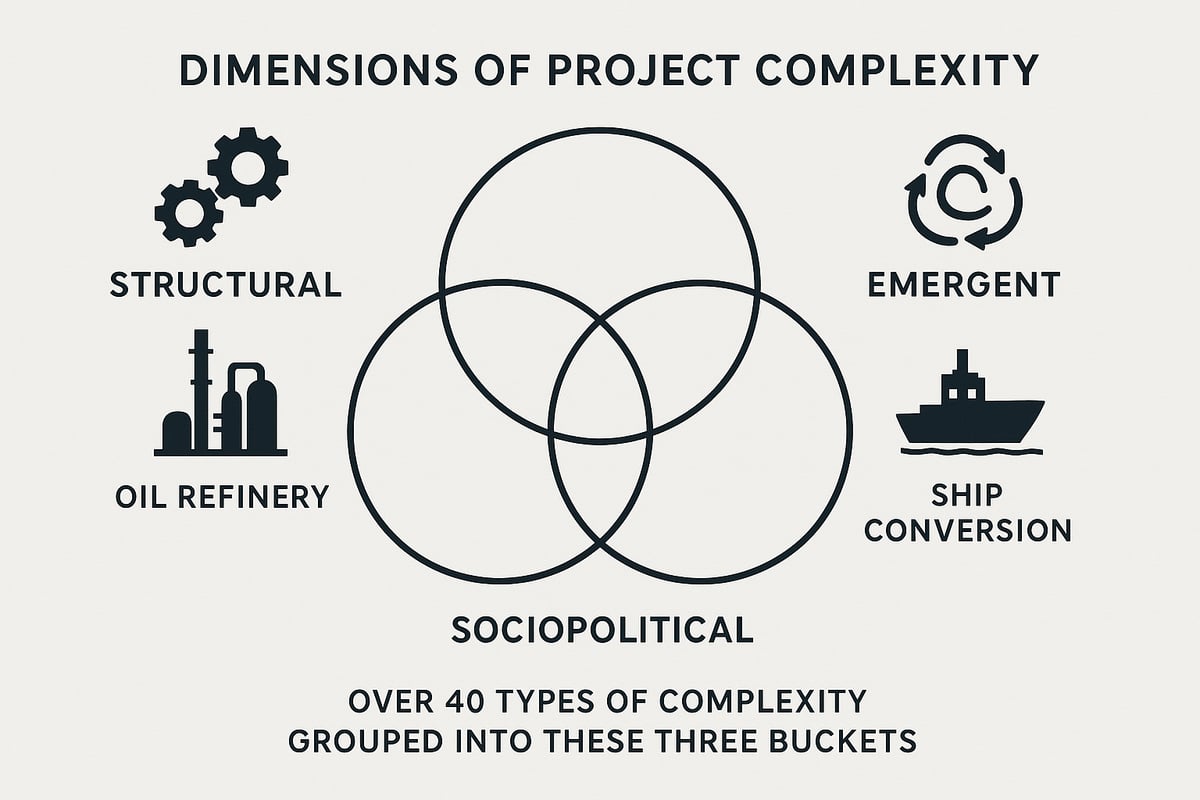
Structural complexity of a project refers to its physical and organizational makeup. This includes the project’s scope, scale, number of participants, contractual arrangements, and geographic distribution. When a project expands in size or involves multiple organizations, the structural complexity of a project increases rapidly.
For instance, large-scale construction projects are classic examples of high structural complexity. Imagine managing hundreds of subcontractors, thousands of tasks, and operations across several countries. Research shows that projects lasting longer than 18 months often carry a high degree of structural complexity of a project, demanding careful planning and coordination.
Key structural factors:
Number of teams and stakeholders
Geographic spread
Contractual layers and dependencies
Structural complexity of a project is often visible and measurable, but its impact can ripple through every phase, affecting timelines, budgets, and risk exposure.
Emergent complexity of a project is all about change. Unlike structural elements, emergent factors are fluid and unpredictable. They arise from shifting requirements, market volatility, technological disruption, and rapidly evolving stakeholder expectations. In 2026, the pace of change is even faster, making emergent complexity of a project a top concern for leaders.
Consider a ship conversion project. Midway through, oil prices fluctuate, or a client demands major design changes. Suddenly, plans must adapt on the fly. This emergent complexity of a project is not just a threat. It can also unlock opportunities for innovation and competitive advantage, provided teams are ready to respond.
Key emergent triggers:
Changes in scope or requirements
Market and regulatory shifts
Technology upgrades and disruptions
Projects that embrace emergent complexity of a project as a source of learning, rather than a setback, often outperform rigid competitors.
Sociopolitical complexity of a project involves people, power, and politics. This dimension covers the diversity of stakeholders, internal and external politics, and the unpredictability of human behavior. In government projects, for example, leadership changes or public scrutiny can dramatically shift priorities overnight, adding layers of sociopolitical complexity of a project.
A striking statistic: 70% of project problems originate from people and politics, yet only 10% of training targets these issues. The sociopolitical complexity of a project is often underestimated, but it can derail progress faster than technical challenges.
Key sociopolitical drivers:
Stakeholder diversity and conflicting interests
Organizational culture and hidden agendas
Public opinion and media attention
Understanding the sociopolitical complexity of a project is crucial, especially in multi-stakeholder initiatives or high-visibility environments.
Recognizing the complexity of a project across these three dimensions is the foundation of modern project management. As digital transformation and construction projects become more multi-dimensional, the ability to diagnose and address all facets of complexity of a project will determine which teams succeed.
Navigating the complexity of a project in 2026 requires a deep understanding of the forces that shape today’s project environments. Each project, regardless of industry, is influenced by a unique combination of factors that can make or break success. Let’s break down the critical drivers you need to watch.

Several core elements drive the complexity of a project today. These aren’t isolated—they interact to create a multi-dimensional challenge.
Project Size and Duration: Large projects with extended timelines often face more moving parts and greater uncertainty. Scope creep, where project requirements expand over time, can quickly escalate the complexity of a project.
Technology Maturity: Integrating new digital tools, such as AI-driven platforms or cloud collaboration software, introduces unknowns. Teams must manage technical risks and learning curves, increasing the complexity of a project.
Team Composition: Cross-functional, distributed, and multicultural teams add layers of coordination. Communication barriers, time zone differences, and cultural nuances all contribute to the complexity of a project.
Stakeholder Landscape: More stakeholders mean more interests and potential conflicts. Projects with diverse or conflicting stakeholder groups require robust engagement strategies.
Regulatory, Environmental, and Compliance Requirements: Projects spanning multiple jurisdictions must navigate varying regulations and standards, amplifying the complexity of a project.
Resource Constraints and Supply Chain Volatility: Limited access to skilled labor, materials, or technology can delay progress. Global supply chain disruptions are increasingly common and add unpredictability.
Risk Environment: Both known and emerging risks, from cybersecurity threats to sudden regulatory changes, must be anticipated and managed throughout the project lifecycle.
Here’s a quick summary table:
Factor | Impact on Complexity of a Project |
|---|---|
Project size & duration | More moving parts, greater uncertainty |
Technology integration | Technical risk, learning curve |
Team diversity | Communication, coordination challenges |
Stakeholder landscape | Conflicting interests, engagement needs |
Regulations & compliance | Multiple standards, legal barriers |
Resource & supply chain | Delays, unpredictability |
Risk environment | New risks, ongoing threat management |
Recent industry studies highlight how the complexity of a project continues to rise. According to a PwC survey, 74% of capital project leaders observed increased complexity over the past decade, underlining the need for advanced governance and risk management strategies.
Consider a construction project that stretches across several countries. Such initiatives encounter compounded regulatory and sociopolitical complexity, as teams must comply with diverse laws and manage stakeholders from different cultures. When new technologies are introduced, the complexity of a project can spike, especially if risks are underestimated. Projects that embrace emerging technologies often face higher failure rates, not due to technology itself, but because the full spectrum of complexity isn’t recognized early.
The complexity of a project rarely stems from a single source. Instead, it emerges from the way different factors interact and amplify one another.
Imagine a scenario where a new environmental regulation (an emergent factor) is introduced midway through a project. This regulatory change may require the project team to adjust workflows, impacting the structural setup. At the same time, it can heighten tensions among stakeholders, fueling sociopolitical complexity.
Successful project leaders recognize that the complexity of a project is not static. When structural, emergent, and sociopolitical factors collide, they can rapidly escalate challenges. For example, a supply chain disruption (structural) might force design changes, which then prompt stakeholder objections (sociopolitical), all while new compliance requirements (emergent) are coming into play.
To manage the complexity of a project effectively, leaders must anticipate these interactions. Rather than addressing each factor in isolation, they adopt a holistic view, using scenario planning and dynamic risk assessment to stay ahead of compounding issues. This proactive approach equips teams to respond with agility and confidence, even as new layers of complexity arise.
Effectively measuring the complexity of a project is essential for project leaders in 2026. Without a clear understanding of complexity, teams risk underestimating requirements, missing critical risks, or misallocating resources. As projects become more dynamic and multi-dimensional, robust frameworks and tools become the foundation for successful delivery.

Several frameworks help organizations assess the complexity of a project. The Project Management Institute (PMI) offers a widely recognized complexity framework, which evaluates structural, emergent, and sociopolitical dimensions. Risk assessment matrices are also common, mapping risks by likelihood and impact to visualize project vulnerability.
Other popular tools include:
Complexity scoring systems
Qualitative assessment checklists
Benchmarking against past projects
Each method provides unique insights. Scoring systems are especially useful for quantifying complexity of a project across several factors, such as scope, duration, technology, and team diversity.
Example: Scoring Project Complexity
A practical approach is to assign scores to key project attributes. The table below shows a simplified scoring system for project duration and technology maturity.
Attribute | Simple (1) | Medium (2) | Complex (3) |
|---|---|---|---|
Duration | <3 months | 3–12 months | >12 months |
Technology Maturity | Proven | Evolving | New/Unproven |
By tallying scores across multiple attributes, teams can estimate the overall complexity of a project. This method enables early identification of projects that may require advanced management techniques or additional stakeholder engagement.
While scoring systems provide structure, qualitative data is equally important. Interviews, stakeholder mapping, and expert judgment help uncover hidden issues that numbers alone may miss. Combining both data types enhances the accuracy of complexity of a project assessments.
Past project metrics and benchmarking further refine measurement. Comparing current projects to similar past efforts can reveal overlooked risks or process gaps. However, rapidly changing environments may limit the usefulness of historical data, highlighting the need for flexible tools.
Traditional tools can struggle when project conditions change quickly. To address this, teams should treat measurement as an ongoing, iterative process. Regularly updating assessments ensures that the complexity of a project remains visible as new risks or requirements emerge.
Simulation exercises and virtual stakeholder mapping are valuable additions. These techniques allow teams to model potential scenarios, uncovering sociopolitical or emergent complexity before issues arise. For example, software simulations can introduce virtual stakeholders with unpredictable behaviors, helping teams test response strategies.
In 2026, digital transformation is revolutionizing how organizations measure and manage the complexity of a project. Integrated project management platforms now offer real-time tracking of complexity indicators, from resource allocation to stakeholder engagement. These platforms centralize data, making it easier to spot patterns or emerging risks.
Simulation tools have become invaluable for scenario planning and stakeholder management. Teams can run role-play exercises to reveal hidden sociopolitical dynamics or predict the impact of regulatory changes. Cloud-based platforms also facilitate collaboration across distributed teams, breaking down information silos.
Construction projects, in particular, benefit from these innovations. The adoption of integrated digital workflows in construction projects demonstrates how tools like BIM and cloud solutions streamline data sharing and complexity assessment. These technologies not only improve transparency but also support adaptive planning as project conditions evolve.
Ultimately, the most effective approach combines robust frameworks, qualitative insights, and advanced digital tools. By continuously measuring and adapting to the complexity of a project, organizations increase their chances of delivering successful outcomes in today’s fast-paced environment.
Effectively managing the complexity of a project in 2026 requires a shift in mindset and the adoption of advanced strategies. Today's projects face challenges that are more interconnected and dynamic than ever before. To navigate this landscape, project leaders need a toolkit that addresses every dimension of complexity.

Systems thinking is the foundation for addressing the complexity of a project. By viewing a project as an interconnected whole, leaders can anticipate how changes in one area may impact others. This approach helps teams avoid tunnel vision and ensures holistic decision-making.
Adaptive planning is essential. In the current environment, project requirements, technologies, and market conditions change rapidly. Embracing uncertainty as a constant allows project teams to pivot and respond to new information without losing momentum. This flexibility is vital for keeping the complexity of a project under control.
Stakeholder management has become more nuanced. Identifying all stakeholders, understanding their interests, and engaging them early can reduce friction and uncover hidden risks. Techniques like stakeholder mapping and regular feedback loops promote alignment and trust among diverse groups.
Building high-performing, cross-functional teams is another critical strategy. Diversity in skills, backgrounds, and perspectives can be leveraged for better problem-solving. However, it also adds to the complexity of a project, so strong communication protocols and clear roles are essential.
Dynamic risk management moves beyond static registers. Ongoing risk identification, assessment, and mitigation are necessary to address both known and emerging threats. Here’s a sample checklist for dynamic risk review:
- Are there new regulatory changes?
- Has the stakeholder landscape shifted?
- Are new technologies being integrated?
- Have any supply chain disruptions occurred?
- Is the project scope evolving?
Digital tools amplify a team's ability to manage resources, coordinate tasks, and monitor progress in real time. Integrated platforms and simulation tools allow for scenario planning, revealing hidden risks and opportunities.
Transparency, learning, and flexibility form the cultural backbone for managing the complexity of a project. Encouraging open communication and rapid feedback cycles helps teams adapt quickly when challenges arise.
Here’s a table summarizing strategies and their benefits:
Strategy | Benefit |
|---|---|
Systems Thinking | Holistic problem-solving |
Adaptive Planning | Rapid response to change |
Stakeholder Engagement | Reduced conflict, higher alignment |
Cross-functional Teams | Broader expertise, innovation |
Dynamic Risk Management | Proactive issue mitigation |
Digital Tools | Efficiency, real-time insights |
Transparency & Learning | Faster adaptation, continuous growth |
For more on real-world applications, see Effective project management strategies, which details proven approaches for navigating the complexity of a project.
The key is to layer these strategies, not just apply them in isolation. This integrated approach gives teams the resilience and agility needed for success.
Modern construction projects often exemplify the complexity of a project, balancing structural, emergent, and sociopolitical factors. Consider a large-scale urban redevelopment initiative. The structural complexity arises from the sheer scope, multiple contractors, and a geographically dispersed team.
Emergent complexity emerges when market conditions shift, such as sudden changes in material costs or evolving client needs. In one recent example, a spike in steel prices required immediate re-evaluation of procurement strategies, showcasing how the complexity of a project can escalate quickly.
Sociopolitical complexity surfaces through diverse stakeholders: city officials, local communities, environmental groups, and investors. Conflicting interests and regulatory uncertainty demand robust stakeholder engagement. Project leaders held a series of workshops with all parties, using digital collaboration tools to collect feedback and track concerns.
The team implemented phased planning, breaking the project into manageable segments. Each phase included checkpoints for reassessing risks, resources, and stakeholder input. Digital dashboards provided real-time updates, improving predictability and reducing misunderstandings.
By applying these layered strategies, the project saw fewer delays, less conflict, and more predictable delivery timelines. The complexity of a project was not eliminated, but it became manageable and even a source of competitive advantage.
Ultimately, success in complex environments hinges on the ability to see the whole system, adapt to change, and engage people at every level. The complexity of a project in 2026 is a challenge, but with the right strategies, it is also an opportunity for innovation and growth.
Leadership sits at the heart of navigating the complexity of a project. In 2026, successful project delivery depends less on rigid control and more on a leader’s ability to adapt, inspire, and respond to constant change. Projects are no longer linear or predictable. Instead, they demand leaders who can interpret signals, embrace ambiguity, and rally diverse teams around a shared vision.
Modern leaders must possess a blend of adaptability, vision, and emotional intelligence. These traits are essential for recognizing the early signs of the complexity of a project and responding with agility. For example, when facing shifting stakeholder expectations or sudden regulatory changes, emotionally intelligent leaders foster trust, reduce resistance, and guide teams through uncertainty.
Organizational maturity plays a crucial role in managing the complexity of a project. Mature organizations operate at higher competency levels, moving from basic process adherence to an advanced state where uncertainty is not feared but leveraged. These organizations empower leaders to facilitate rather than control, enabling them to guide teams through evolving project landscapes.
A core aspect of maturity is the shift in mindset. Instead of viewing project management as a checklist, mature leaders act as facilitators, coaches, and connectors. They break silos, encourage open communication, and create environments where learning from failure is valued. This approach is vital for projects with high sociopolitical or emergent complexity.
To accelerate maturity, organizations often invest in targeted leadership programs. For instance, the Leading Complex Projects program at UC Berkeley equips leaders with frameworks and tools to navigate structural, emergent, and sociopolitical challenges. Such initiatives prepare leaders to anticipate and respond to the multifaceted complexity of a project.
Addressing the complexity of a project requires more than technical skills. Training must focus on developing soft skills, especially for managing stakeholder diversity and unpredictability. Despite 70% of project issues stemming from people and politics, traditional training still underrepresents these areas.
A notable example comes from UK government project teams, which use simulation exercises to build stakeholder management skills. These immersive scenarios mirror real project challenges, enabling leaders to practice negotiation, conflict resolution, and adaptive thinking in a controlled environment.
Data supports this approach. Teams with advanced soft skills resolve conflicts faster and adapt more effectively to change. This agility directly translates to improved project outcomes, especially in environments where the complexity of a project can shift overnight.
Leadership development is not a luxury, but a necessity for organizations managing the complexity of a project. As complexity increases, leaders must continuously refine their skills, foster resilient cultures, and champion adaptive practices.
By embracing maturity models and investing in holistic training, project organizations position themselves to thrive amid uncertainty. Those who prioritize leadership will not only manage complexity, but turn it into a strategic advantage.
The future landscape of the complexity of a project is rapidly evolving. As we approach 2026, leaders face new challenges and opportunities shaped by technology, workforce shifts, and societal demands. Understanding these trends is essential for staying ahead.
By 2026, AI, automation, and data analytics are transforming the complexity of a project across industries. Project managers now leverage intelligent platforms for real-time insights, scenario analysis, and predictive risk assessment. These technologies streamline routine tasks, allowing teams to focus on higher-value work.
AI-powered tools are especially valuable in complex projects, where unknowns and rapid changes are the norm. For example, AI can help forecast resource constraints or simulate stakeholder responses to sudden changes. If you want to learn more about how these tools are shaping the future, check out AI and no-code platforms revolutionize project management.
Another major driver of the complexity of a project is the shift toward hybrid and remote work. Teams are increasingly distributed across geographies, time zones, and cultures. This diversity introduces new communication challenges and requires robust collaboration tools.
Managing hybrid teams means rethinking traditional project structures. Leaders must adapt to asynchronous workflows and digital-first communication. The complexity of a project grows as organizations strive to build trust and cohesion in virtual environments, making cultural intelligence and flexibility crucial skills.
Evolving regulatory landscapes and a growing focus on sustainability are reshaping the complexity of a project. Projects must now comply with stricter environmental standards and navigate a patchwork of local and global regulations. This is especially evident in construction and infrastructure, where sustainability targets are often central to success.
Stakeholder expectations are also changing. There is increased demand for transparency and long-term value creation. Organizations adopting holistic frameworks, like those discussed in The winning formula for project success, are better positioned to manage these demands while reducing risk.
Looking forward, the complexity of a project will only intensify as technologies advance and stakeholder networks expand. Projects will require adaptive strategies that account for interconnected risks and opportunities. Digital transformation initiatives in construction and infrastructure serve as early examples of this trend.
To gain a competitive edge, organizations must proactively invest in building complexity management capabilities. This means fostering a culture of continuous learning, leveraging emerging tools, and developing leaders equipped for uncertainty. Those who embrace this multidimensional approach will set the standard for project success in 2026 and beyond.
If you’re ready to take the next step and turn complex ideas into real results, let’s put these strategies into action together. We know managing project complexity in 2026 calls for more than just good intentions—solid planning, expert oversight, and the right tools make all the difference. Whether you’re envisioning a custom renovation, a stunning landscape, or a full-scale construction project, you deserve a partner who understands every layer of complexity. Let’s chat about your goals and design a plan tailored to your needs—simply Book a Consultation and let’s get started.