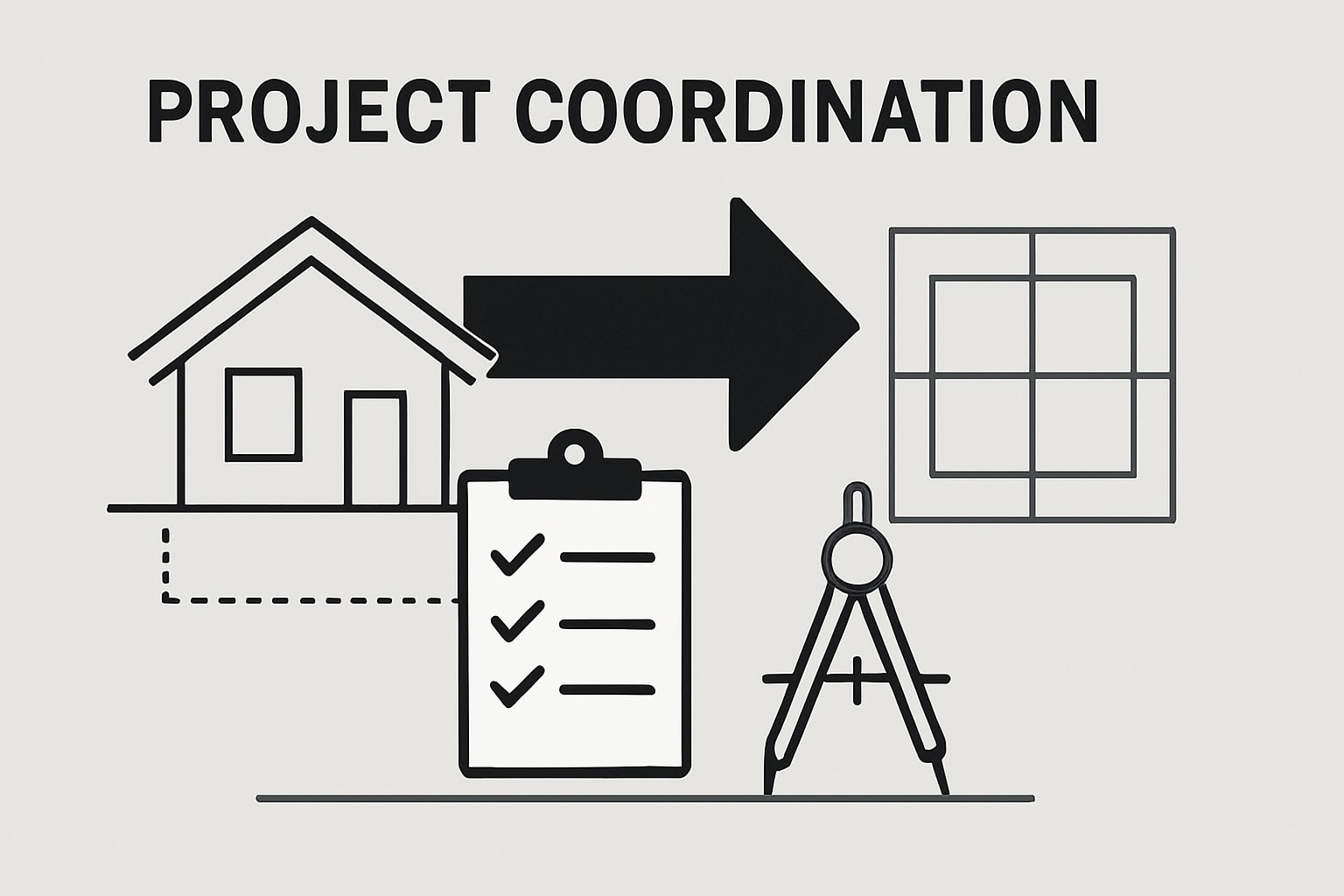
Imagine watching your dream outdoor living space or custom home come to life, every detail executed with precision and no unexpected costs or missed deadlines. The secret behind these flawless, high-value results is expert project coordination.
Project coordination ensures seamless collaboration between architects, landscape designers, trades, and municipal authorities, protecting your vision and investment at every stage. For complex builds in Ontario, getting project coordination right is essential.
This guide shares proven strategies, cutting-edge tools, and seasoned insights to help you coordinate teams, manage risks, and deliver premium construction and landscape projects—on time and within budget.
Discover the core principles of project coordination, the evolving role of coordinators, step-by-step strategies, must-have skills, Ontario-specific best practices, and how expert oversight from Solid Plan prevents costly mistakes.
Whether you are a homeowner, architect, or builder, unlock the blueprint for stress-free, premium project delivery through reliable project coordination.
In 2026, project coordination is the art and science of orchestrating daily tasks, seamless communication, and resource management to keep premium construction projects on track. For Ontario’s high-end landscape and pool builds, project coordination ensures every specialist, from architect to trade, works in sync.
Unlike project management, which sets the vision and steers overall direction, project coordination is hands-on, handling the day-to-day flow that brings designs to life. Both roles are essential for high-value projects, especially as residential and outdoor living spaces in the GTA become more complex.
Today’s projects face growing layers of complexity. Multi-disciplinary teams, evolving municipal by-laws, and stricter permitting require constant collaboration. Digital tools and remote meetings are now standard, with clients demanding more transparency. According to Asana, 26% of project deadlines are missed weekly due to poor coordination. Learn more about these challenges and solutions in Managing Project Complexity.
Effective project coordination protects both design intent and client investment. Consider a GTA pool and landscape project: success depends on synchronizing architects, engineers, trades, and municipal authorities. Without strong coordination, projects risk delays, costly change orders, and missed opportunities for quality.

A skilled project coordinator is the driving force behind seamless project coordination, ensuring every phase of a premium build aligns with the original vision. In Ontario’s complex residential landscape, their oversight is essential for delivering quality results, on time and on budget.
Project coordinators manage scheduling, document control, trade and supplier coordination, budget tracking, and quality assurance. By bridging the gap between design and execution, they protect architectural intent from being compromised by site errors or value engineering. Early involvement in planning, sequencing, and construction drawings is key to preventing costly change orders.
Navigating Ontario’s unique challenges, such as municipal approvals, conservation authority permits, and site inspections, requires deep local expertise. Coordinators engage early, sequencing grading and construction tasks to avoid delays and ensure compliance. For example, aligning grading plans with pool installation prevents rework and maintains project momentum.
Daily, coordinators lead progress meetings, conduct site walks, update schedules, and resolve trade conflicts. They act as a single point of oversight, removing blockers and making critical information accessible to all stakeholders. With strong budget management—a skill supported by insights like those found in Financial and Project Management Insights—they help owners and professionals avoid overruns and protect investments. Expert project coordination is not just a role, but the backbone of high-value, stress-free construction.
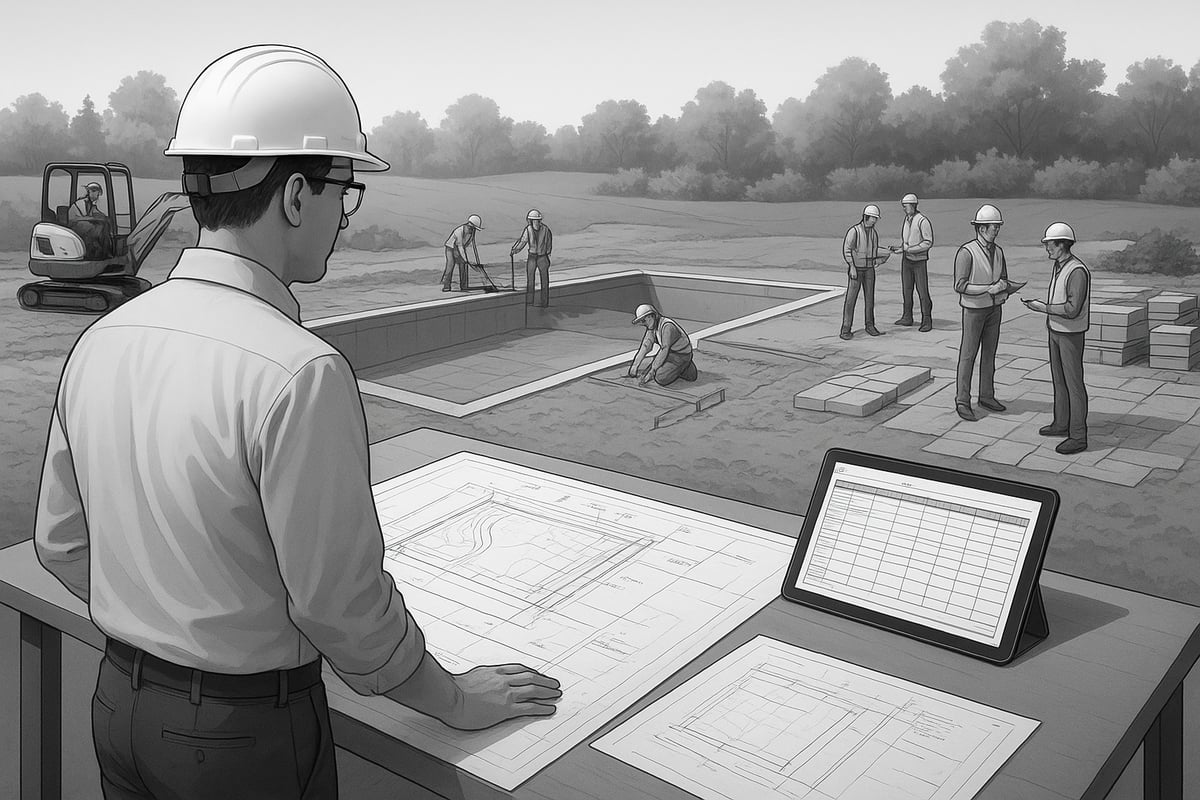
Achieving seamless project coordination on complex Ontario builds requires a disciplined, stepwise approach. Each stage is essential for quality, efficiency, and protecting your investment. Here’s how Solid Plan delivers premium results from concept to completion.
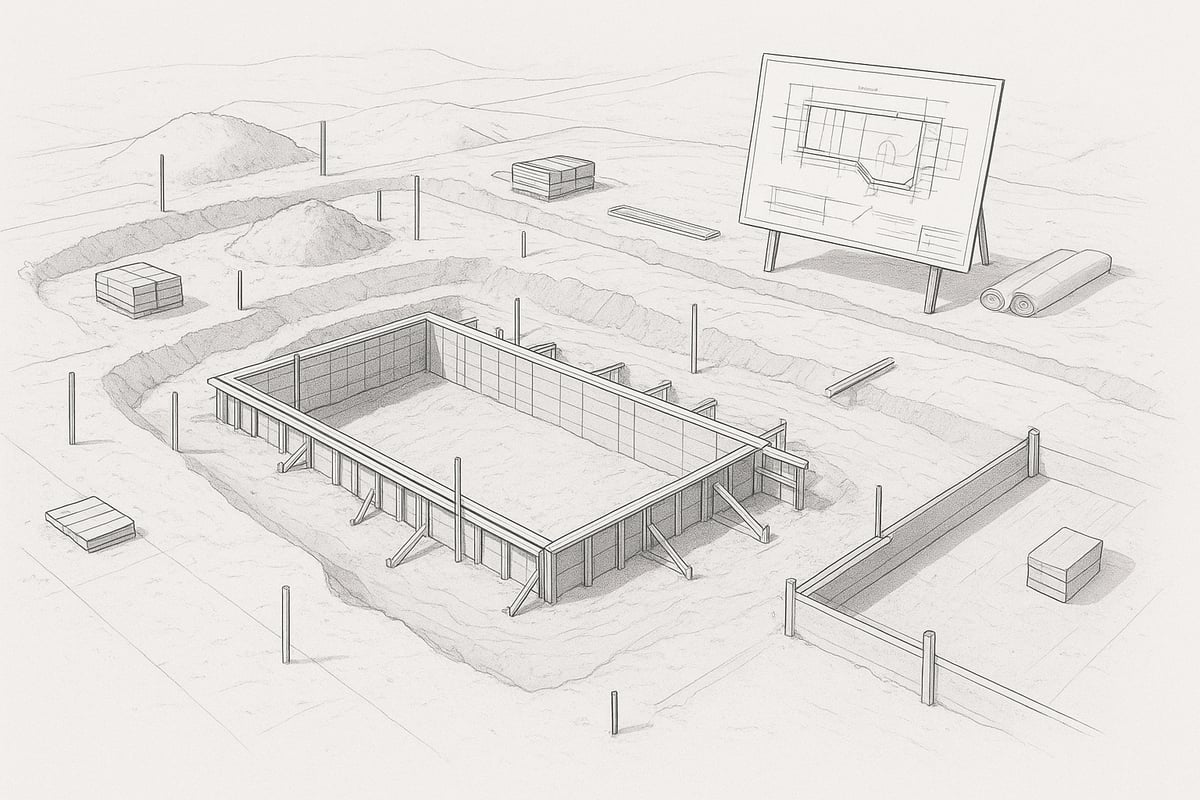
Every successful project coordination process starts with crystal clear objectives. Solid Plan leads collaborative workshops with owners, architects, and trades to define the vision and set boundaries. We document the scope in detail, which prevents scope creep and avoids future disputes.
Identifying all stakeholders early, including municipal authorities and specialty consultants, is crucial. For example, in a GTA pool and outdoor living project, scope definition must account for grading, pool enclosure rules, and conservation authority input. Early clarity keeps miscommunication at bay and minimizes costly change orders.
Explore more GTA-specific pool and landscape coordination case studies in our Pools and Landscape Project Guides.
Solid Plan coordinates complete construction drawings, grading plans, and permit packages. Sequencing each task is vital, especially with Ontario’s climate—planning pool shell installation before deep winter avoids weather delays.
Thorough documentation supports precise trade tendering and budgeting. For instance, sequencing landscape grading before pool placement means fewer disruptions and no rework. Attention to detail at this stage is the backbone of every successful build.
We prepare comprehensive tender packages to attract the right trades and suppliers. Aligning bids with both design intent and budget is a cornerstone of project coordination. Early engagement with specialized trades and suppliers ensures material lead times are respected.
Most budget overruns stem from late trade involvement or unclear documents. By managing procurement proactively, we keep costs controlled and the project on track, safeguarding your investment.
Building a realistic, detailed schedule is non-negotiable. We map out milestones and critical paths, using digital tools like Gantt charts or Kanban boards for clear visualization. Regular coordination meetings keep everyone aligned.
Prompt communication of schedule changes to the team reduces surprises. Teams using real time updates and visual tools are far less likely to miss deadlines, ensuring your project stays on course for timely completion.
Quality assurance is embedded at every phase, from site prep to finishing. We coordinate municipal and third party inspections, resolving deficiencies before they become expensive problems. Identifying risks early—weather, supply chain, or regulatory—lets us develop solid contingency plans.
For example, pre pour inspections for pool construction are crucial. Strong project coordination at this stage prevents costly remediation and ensures premium results, every time.
Success in project coordination relies on a blend of technical expertise, organizational discipline, and proactive communication. For premium landscape and pool construction in Ontario, coordinators must master several core skills to keep complex projects on track.
Modern project coordination demands robust digital tools. Project management platforms, such as Gantt charts and Kanban boards, centralize scheduling and task tracking. Cloud document sharing ensures all stakeholders access the latest plans. Scheduling apps help visualize milestones, while dashboards highlight progress and flag issues in real time.
According to AI in Project Management Statistics, teams using digital solutions consistently outperform those relying on manual processes, reducing missed deadlines and costly errors.
A centralized dashboard enables coordinators to monitor every aspect of a custom pool and landscape build. It streamlines communication, tracks approvals, manages procurement, and ensures quality control inspections happen on schedule. This level of oversight is essential for safeguarding design intent and investment.
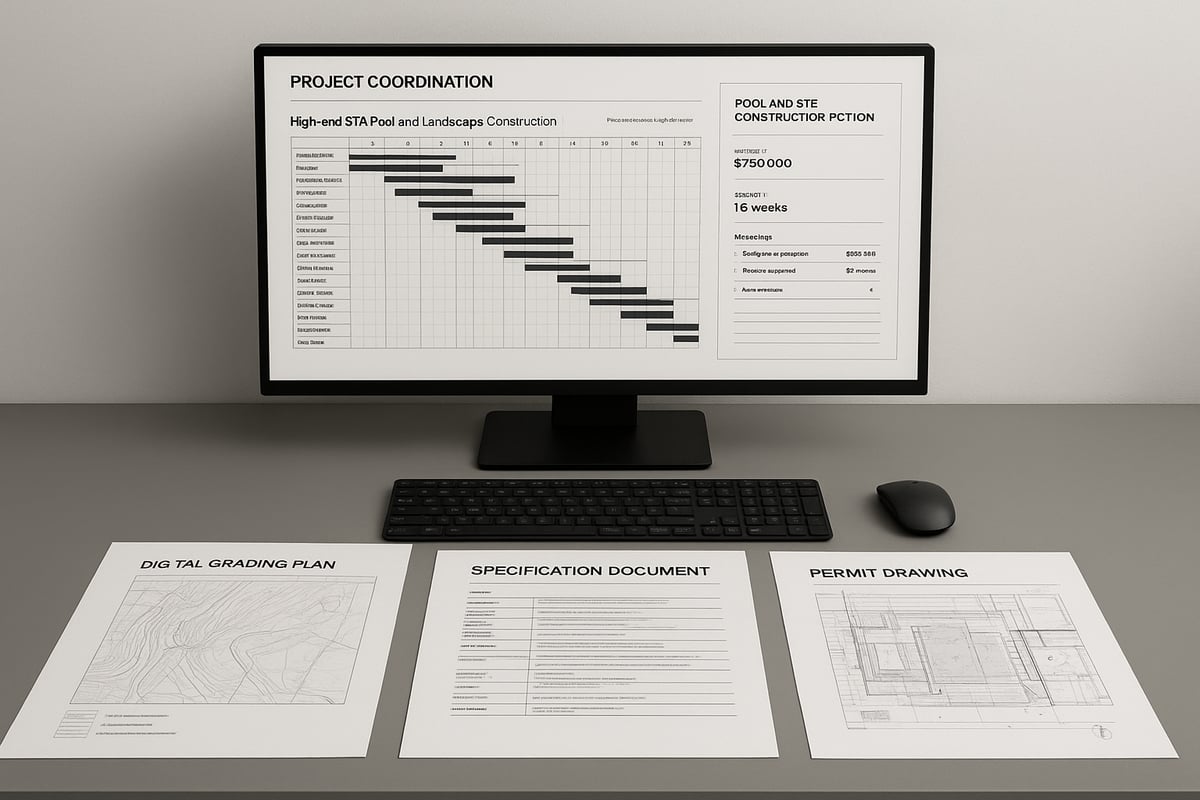
Navigating Ontario’s construction landscape requires specialized expertise and local knowledge. Every premium project in the GTA faces a maze of municipal by-laws, conservation authority regulations, and layered permit processes that demand careful attention from the outset.
Successful project coordination starts with early engagement. By involving all relevant authorities and consultants early, teams can clarify grading, conservation, and pool enclosure requirements. This reduces costly change orders and prevents delays that often occur when approvals are left to the last minute.
Ontario’s unpredictable weather means that robust scheduling and built-in contingencies are essential. Seasonal factors, like spring thaw or winter freeze, must shape the sequencing of pool, landscape, and utility work. Failure to plan for these realities can derail timelines and increase costs.
Coordinating with hydro, gas, and municipal services before breaking ground is critical. Early utility locates and service planning help avoid conflicts that can halt work and disrupt the construction sequence. For insights into how Toronto manages these complexities, see Construction Coordination in Toronto.
Consider a GTA pool project: strict municipal pool enclosure rules dictate sequence and timing. A Solid Plan coordinator ensures each step aligns with local standards, protecting both design vision and investment.
| Ontario Challenge | Best Practice Solution |
|---|---|
| Complex permit requirements | Early, detailed application packages |
| Utility/service conflicts | Advance coordination with providers |
| Weather-related delays | Built-in contingency scheduling |
| Change order risk | Precise scope and documentation |
Engaging an Ontario-based expert for project coordination is the surest way to achieve seamless, premium results in this demanding environment.
Early, expert project coordination sets the foundation for every premium construction and landscape project in Ontario. By developing comprehensive construction drawings, detailed grading plans, and thorough documentation from the outset, teams avoid costly surprises. A single point of oversight ensures accountability, consistency, and that all stakeholders stay aligned throughout the build. Leveraging a Construction Risk Management Plan further reduces the likelihood of delays and change orders.
Proactive trade coordination is essential to prevent sequencing conflicts and rework. For instance, in one GTA project, missed grading coordination led to expensive rework and extended timelines. With project coordination, every phase is checked, from tendering to inspections, so potential issues are caught early. This approach protects the client’s investment and upholds the design intent all the way to completion.
Transparent budgeting and real-time cost tracking are critical to delivering high-quality results without overruns. By continuously monitoring progress, expert coordinators safeguard against unexpected expenses and maintain premium standards. Investing in project coordination means more than just peace of mind—it ensures your vision is realized with precision, quality, and long-term value.
Now that you understand how expert project coordination can transform complex residential and outdoor projects—keeping every detail on track, on budget, and up to the highest standards—why not take the next step toward your own seamless build? If you’re ready to bring your vision to life with the confidence that comes from having a dedicated advocate by your side, let’s talk about how Solid Plan can guide your team’s success in 2026. Start your journey to a stress free, expertly managed project and Book a Consultation today.