Ontario’s luxury construction market is evolving, with 2026 bringing more complex residential, landscape, and pool projects than ever before. As homeowners and design teams pursue ambitious visions, the risk of missed deadlines, budget overruns, and compromised quality grows.
Managing these premium builds demands more than traditional oversight. The stakes are high, and only a proactive approach to project controls construction can deliver predictable, high-quality results.
This guide equips you with proven strategies to master project controls construction, tailored for Ontario’s unique regulatory and design landscape. Discover what project controls are, their essential components, step-by-step implementation, technology trends for 2026, and best practices for success in Ontario’s high-value sector.
Project controls construction is the backbone of successful high-value building projects in Ontario. These systems and processes are designed to plan, monitor, and manage every aspect of a project’s scope, cost, schedule, and quality. Solid Plan leverages project controls construction to bring order and predictability to complex residential, landscape, and pool builds.
While project management sets the overall direction, project controls serve as the technical navigator, guiding the team through detailed scheduling, budgeting, and quality assurance. Consider this simple comparison:
| Project Management | Project Controls Construction |
|---|---|
| Sets goals and vision | Tracks progress against goals |
| Manages teams | Manages scope, schedule, cost, quality |
| Communicates with owners | Provides technical data for decisions |
The core competencies of project controls construction include:
For Ontario’s premium pool, landscape, and custom home projects, these controls are vital. Navigating grading, complex permitting, and trade coordination requires precision. Studies show that project controls construction can reduce cost overruns and schedule delays by as much as 30% on large projects.
Collaboration is strengthened, as owners, architects, and builders share up-to-date data and transparent reports. High data quality and integrated systems support informed decisions, keeping projects on track and protecting design intent.

Effective project controls construction is built on three pillars: planning and scheduling, cost management, and proactive oversight of risks, changes, and quality. For Ontario’s high-end residential projects, getting these elements right means the difference between a seamless build and costly setbacks. Each component works together to deliver predictable, premium outcomes.
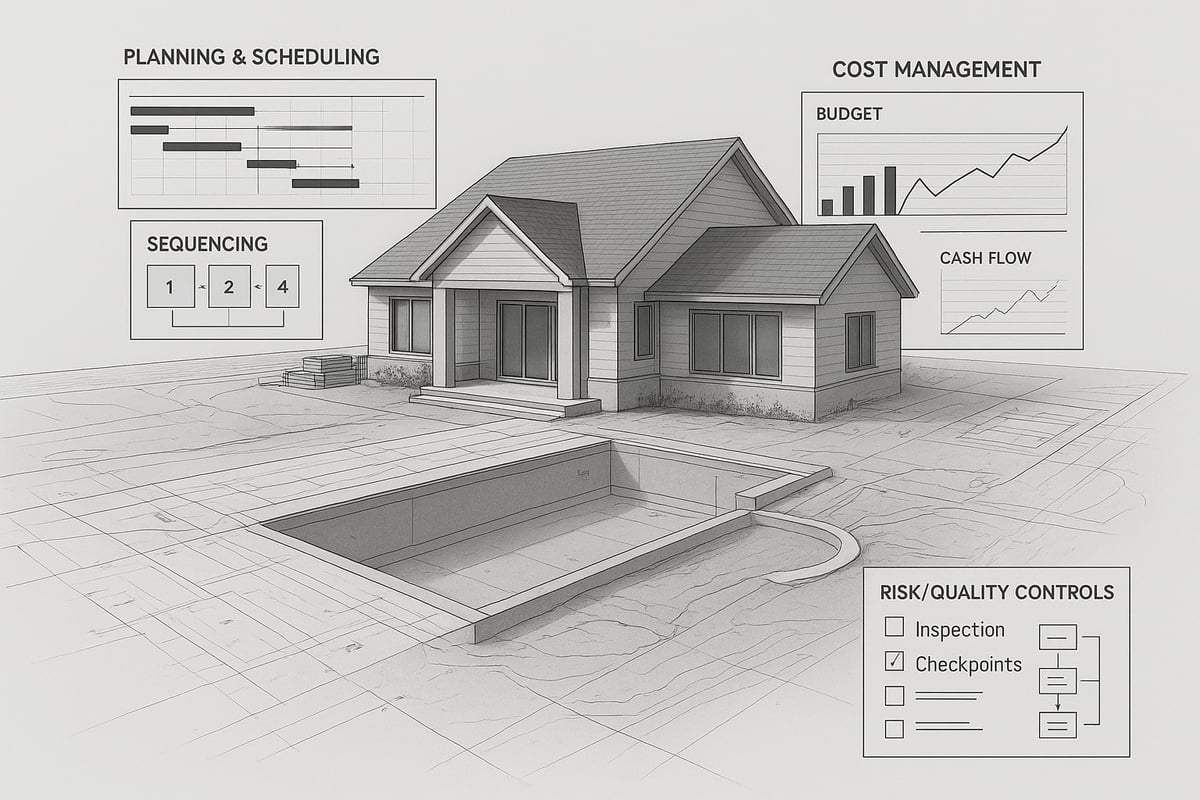
Strong planning is the foundation of project controls construction. Construction-ready plans and detailed sequencing are essential for avoiding delays and rework, especially with complex grading or pool builds. Tools like Gantt charts, critical path method (CPM), and lookahead schedules break down each phase, ensuring every trade is coordinated.
For example, mapping out early grading and pool excavation before hardscape or planting work begins prevents conflicts and expensive change orders. This approach keeps the build on track, protects design intent, and supports efficient site management.
Project controls construction relies on accurate budgeting and ongoing cost tracking. Setting clear budgets, cash flows, and benchmarks from the outset allows teams to spot issues before they escalate. Real-time cost reporting, paired with benchmarking against similar Ontario projects, helps prevent budget blowouts.
Tracking local variables like permit fees, utility locates, and site preparation costs is critical. For further insights on how financial controls can drive project success, see Financial and Project Management Insights. Consistent monitoring ensures that premium quality is delivered without financial surprises.
Proactive risk management is vital in project controls construction. Identifying risks such as weather, by-law changes, or site constraints early allows for timely mitigation. Formal change management controls scope creep, with all changes documented and approved before implementation.
Quality management integrates inspections, mockups, and milestone sign-offs into the build, ensuring every detail meets the highest standards. These processes protect both the client’s investment and the project’s design vision, minimizing costly corrections and ensuring on-spec results.
Successful project controls construction for high-end Ontario homes demands a disciplined, phased approach. Each step is vital to protect the design intent, budget, and schedule. Solid Plan guides clients through every phase, ensuring no detail is overlooked.
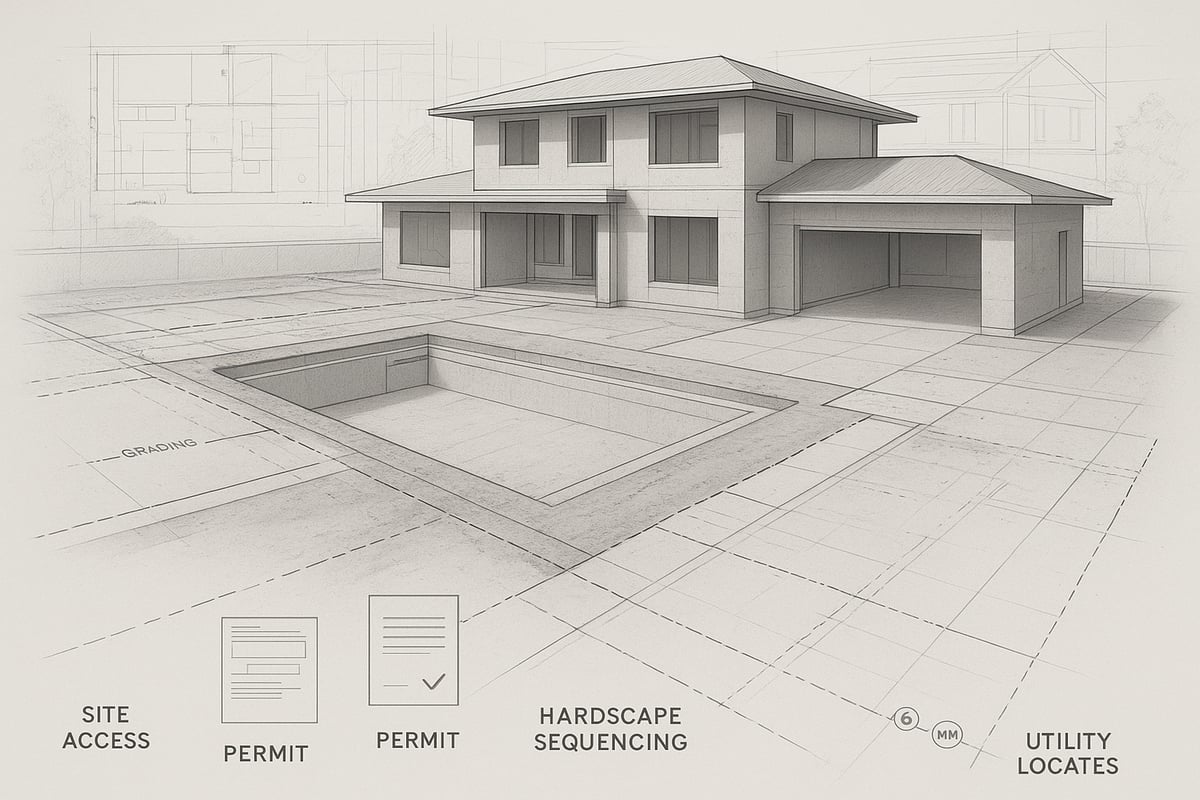
Engage all stakeholders early. Owners, architects, and landscape architects should collaborate before design finalization. Develop construction-ready drawings that are both permit- and tender-ready.
Coordinate grading, drainage, and pool layout at the outset to avoid downstream conflicts. For detailed Ontario-specific strategies, see Pools and Landscape Project Guides. Early integration of project controls construction prevents costly changes and delays.
Map out municipal, conservation, and pool enclosure approvals unique to Ontario. Build permit timelines, such as Toronto’s Ravine & Natural Feature Protection by-laws, into the master schedule.
Proactive planning ensures compliance and avoids last-minute surprises that can derail premium projects.
Sequence tendering to secure the best trades and lock in pricing. Use detailed bid packages to reduce ambiguity and change orders.
Evaluate bids not just on cost, but also on track record and quality. Precise scopes lead to better project results.
Develop a critical path schedule covering all phases from site prep to planting. Lookahead planning and weekly coordination meetings are essential.
Real-time tracking and dashboard reporting are central to project controls construction. This approach maintains schedule, quality, and budget alignment.
Set up regular reviews for cost, schedule, and quality with all stakeholders. Document and approve every change before work proceeds.
Use project controls software to ensure transparent, reliable reporting. This closes the loop on every phase and safeguards premium outcomes.
Technology is rapidly transforming project controls construction for Ontario’s luxury residential sector. With complex grading, custom pools, and intricate landscapes, managing quality and coordination demands more than spreadsheets. Digital tools are now essential for planning, sequencing, and cost management from day one.

Modern project controls construction now integrates directly with design software. For example, linking CAD or BIM models enables exact takeoffs, clear sequencing, and early clash detection. As shown in the Integrated 4D/5D Digital-Twin Framework, this approach provides accurate estimates and schedule control, helping avoid costly surprises.
Mobile field apps are another game changer. Contractors and designers can update site conditions, inspection results, or permit statuses instantly. This real-time documentation supports faster decisions and reduces miscommunication between trades, owners, and architects.
Data-driven decision-making is at the core of premium project controls construction. Custom dashboards track schedules, budgets, and quality milestones, making it easy to spot risks early. Automated notifications for permit approvals, utility locates, and inspection milestones ensure nothing slips through the cracks.
Projects using integrated analytics and cloud-based tracking consistently deliver better outcomes. Industry studies show high-end projects that embrace these tools cut time and cost deviations by over 20 percent, protecting both design intent and investment.
| Technology | Traditional Approach | Tech-Enabled Project Controls Construction |
|---|---|---|
| Scheduling | Paper Gantt charts | Cloud-based CPM, lookahead, BIM sequencing |
| Cost Tracking | Manual spreadsheets | Real-time dashboards, benchmarking |
| Quality Documentation | Binder files | Mobile apps, digital sign-offs |
| Communication | Email/phone | Integrated platforms, automated notifications |
High-end residential builds in Ontario demand a tailored approach to project controls construction. Each site faces a unique mix of municipal by-laws, conservation authority requirements, and seasonal constraints. Early engagement with regulatory bodies, including understanding the latest Ontario's Construction Act Amendments, is critical for smooth approvals and risk management.
Sequencing is everything. Coordinating grading, pool excavation, and hardscape installation must align with local regulations and weather windows. For example, GTA projects often require strict compliance with tree protection and ravine by-laws, making advance planning essential.
Early utility locates, tree protection strategies, and defined site access routes prevent costly delays. These steps reduce the risk of change orders and help maintain construction momentum, even when unexpected issues arise.
Robust contingency planning is vital. Weather events, supply chain hiccups, and inspection delays can derail even the best-laid schedules. Solid Plan builds buffers and alternative strategies into every project controls construction plan.
Consider a case where pool installation, stonework, and planting were coordinated to minimize soil disturbance and rework. This approach not only protected the design intent but also ensured efficient sequencing and fewer site visits.
Rigorous documentation, milestone checklists, and owner advocacy are cornerstones of successful project controls construction. Protecting the designer’s vision, while meeting Ontario’s complex regulatory landscape, sets premium projects apart.
Top Ontario builders benchmark against successful projects, prioritize transparent communication, and invest in integrated project controls systems. These best practices deliver on-time, on-budget, and on-specification results for discerning clients.
In Ontario’s high-value residential sector, a dedicated project controls construction advocate is essential for delivering quality, predictability, and peace of mind. This advocate acts as the technical backbone, bringing order to the complexity that defines custom landscape, pool, and home builds.
At Solid Plan, we serve as the “architect of the build process,” ensuring every construction phase—grading, tendering, and trade coordination—is rigorously planned and executed. By bridging the gap between design, permitting, and construction, a project controls construction advocate protects your investment and maintains your vision throughout the build.
For homeowners and architects, this means fewer surprises, reduced risk of change orders, and strict adherence to budget and timelines. Our oversight ensures that premium outcomes are never compromised, even on the most complex sites. To understand why this role is crucial, see our insights on the complexity of a construction project.
With expert project controls construction, every detail is coordinated, documented, and delivered to the highest standard—guaranteeing your project finishes on time, on budget, and to exact design intent.
After exploring the critical steps and best practices for project controls in Ontario’s high-value residential construction, you can see how the right strategies truly make a difference—protecting your vision, your investment, and your peace of mind. If you’re ready to bring this level of precision and advocacy to your next project, let’s take the first step together. Whether you’re planning a custom landscape, a new pool, or a full-scale renovation, I’m here to help you navigate every detail with confidence and care.
Book a Consultation
and let’s build your dream with certainty for 2026 and beyond.