Premium residential construction and outdoor living projects in Ontario are entering a new era of complexity as 2026 approaches. Evolving by-laws, environmental scrutiny, and discerning client expectations are raising the stakes for every build.
In this landscape, meticulous project plan design is no longer optional. It is the foundation for quality, efficiency, and predictability—essential for homeowners, architects, and builders working at the high end of the market.
This guide delivers actionable strategies for navigating Ontario’s unique challenges. You will discover how early planning, regulatory expertise, robust documentation, disciplined budgeting, and coordinated sequencing can transform even the most ambitious vision into a seamless, successful reality.
In Ontario’s premium residential construction, early project plan design is more than a best practice—it is the foundation for success. The stakes are high, with intricate grading requirements, strict drainage demands, and evolving municipal by-laws shaping every decision. Early planning protects both vision and investment, especially in high-value pool and landscape projects.

Industry studies reveal that projects with robust pre-construction planning experience 30% fewer schedule overruns. Consider a recent GTA homeowner who avoided six-figure cost overruns by finalizing design, securing approvals, and tendering well before breaking ground. This proactive approach allowed for thorough site assessments, uncovering challenges like poor soil quality and heritage tree protection requirements before they became costly surprises.
Early project plan design is also about risk management. Identifying access limitations, conservation authority restrictions, and potential drainage issues upfront prevents mid-project crises. Homeowners, architects, and builders must align their expectations early to ensure seamless collaboration and clear communication.
By establishing accurate budgets and sequencing from the outset, early planning safeguards the original design intent and reduces the likelihood of disruptive change orders. For Ontario’s most demanding projects, a disciplined approach to project plan design delivers predictable outcomes, protects quality, and maintains the integrity of the client’s vision. For more detailed strategies on risk mitigation, explore our Construction Risk Management Plan.
Navigating Ontario’s regulatory landscape is a crucial step in successful project plan design for premium residential and outdoor builds. Each municipality in the GTA enforces its own permitting process, requiring detailed site plan approvals, grading plans, and pool enclosure permits before construction can begin.

Every project plan design must address conservation authority reviews, especially when properties border protected lands or watercourses. These reviews can reshape timelines and require design modifications to satisfy environmental regulations.
Common regulatory hurdles include:
In the GTA, permitting can add two to six months to construction schedules if not managed proactively. For example, a homeowner’s pool project was delayed by an entire season due to late permit submission and incomplete documentation.
To navigate these complexities, engage municipal planners early, prepare comprehensive application packages, and anticipate review cycles. Staying ahead of Ontario’s evolving regulations is vital. For those planning projects for 2026, Ontario's 2026 Construction Act amendments will introduce additional compliance requirements that must be factored into your project plan design.
Expert advocacy is essential. Working with a seasoned general contractor ensures no regulatory detail is overlooked, preventing costly compliance issues and keeping your vision intact.
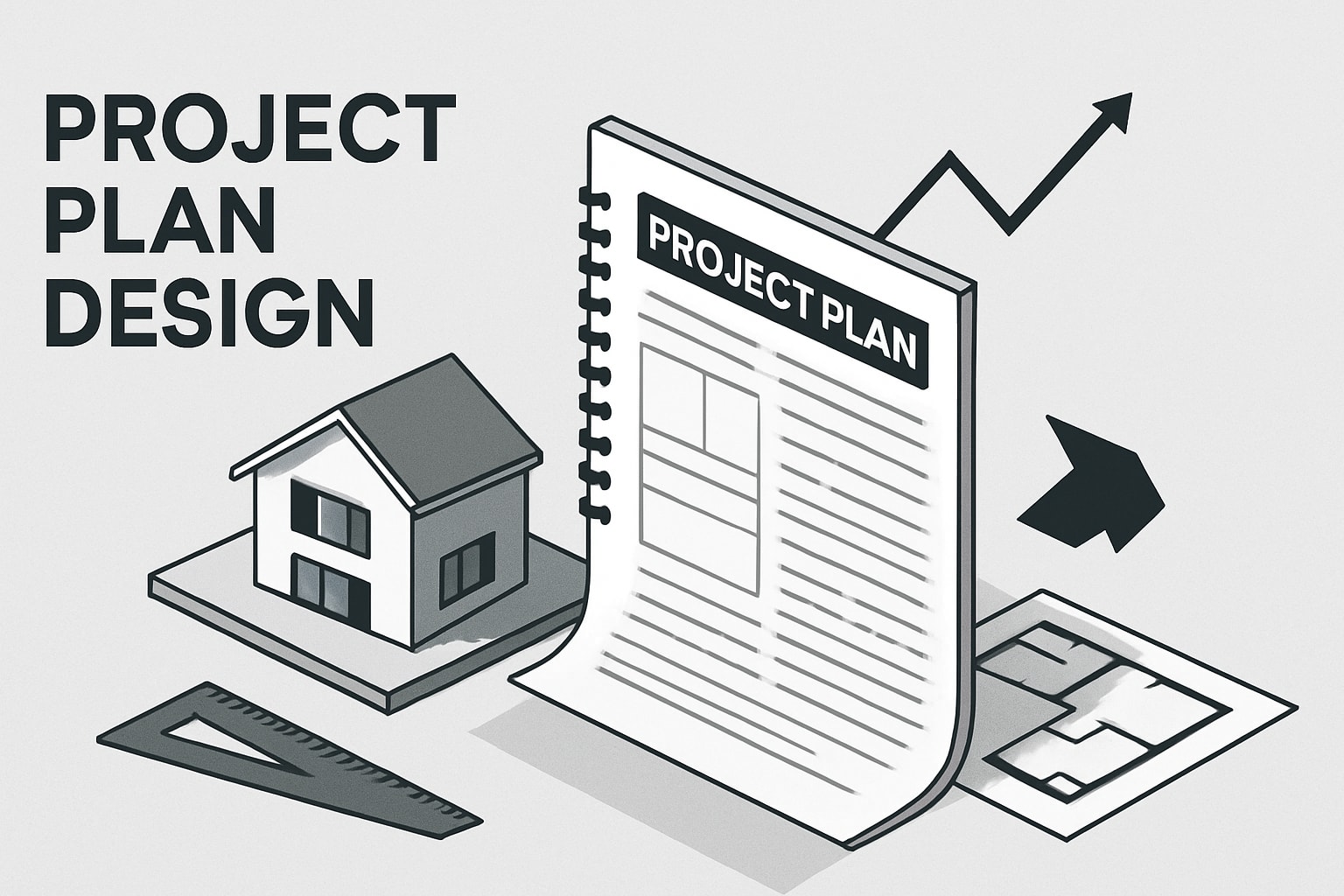
Preparing construction-ready plans is the foundation of any successful project plan design for premium pools, landscapes, and custom homes in Ontario. Every detail must be accounted for before breaking ground, from precise grading layouts to comprehensive structural and landscape drawings. This upfront investment in quality documentation is what separates predictable, high-value builds from those plagued by change orders and delays.

A robust project plan design includes not just architectural drawings but also site-specific documents like grading plans, drainage strategies, and pool enclosure details. Incomplete or vague plans often lead to confusion among trades, misinterpretation on site, and expensive mistakes. By ensuring every consultant's input is fully coordinated, you minimize RFIs and protect the project’s vision at every stage.
For Ontario projects, documentation must address local requirements such as Erosion and Sediment Control, tree protection, and municipal permitting standards. Leveraging tools like BIM and digital plan management streamlines revisions and ensures everyone is working from the latest information. For deeper insights on preparing thorough, construction-ready documents, see Design Drawings and Specs Insights.
The tendering process relies on these detailed packages to attract the right trades and get competitive, apples-to-apples pricing. This clarity helps prevent scope gaps and keeps budgets on track. Ultimately, disciplined documentation and coordination are the safeguards that maintain design integrity and deliver the premium results Ontario’s most discerning clients expect.
Meticulous budgeting and disciplined tendering are the backbone of every successful project plan design in Ontario’s premium residential sector. For high-value pool, landscape, and custom home projects, early-stage cost clarity protects both design intent and investment. The budgeting process should begin with a preliminary estimate, followed by trade-specific pricing once construction-ready drawings are complete. Accurate project plan design aligns scope, material allowances, and escalation factors, preventing surprises as the project progresses.
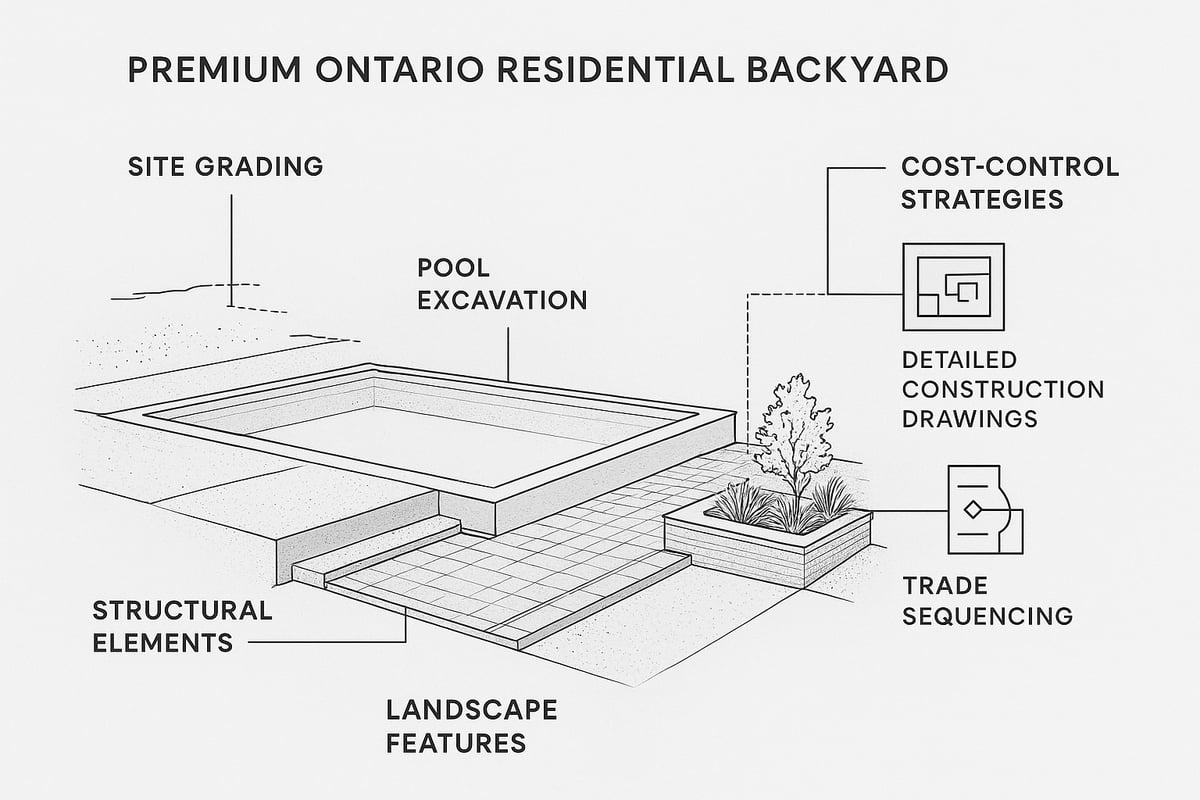
Competitive tendering is essential in project plan design. By inviting multiple qualified trades to bid on a well-defined scope, you ensure apples-to-apples pricing and select the best partners for quality and value. Transparent tender documents reduce costly change orders and help maintain budget discipline.
In Ontario, site-specific risks like rock, fluctuating water tables, and utility conflicts can quickly inflate costs. Robust contingency planning—setting aside 10–15% for unknowns—protects your bottom line. According to industry data, projects with clear, transparent budgets experience 25% fewer cost overruns. For example, one GTA landscape build remained within 2% of its original budget because of disciplined cost tracking and regular reporting.
It is crucial to stay ahead of regulatory updates. With Ontario's 2026 Construction Act changes impacting contract terms and payment schedules, incorporating these legal requirements into your project plan design is vital. Leverage digital tools for real-time cost tracking and reporting, and review budget status at every project milestone. This approach ensures your project plan design delivers predictability, protects quality, and secures your vision from start to finish.
Effective sequencing and trade coordination are the backbone of any successful project plan design in premium Ontario construction. Without precise planning, even the most innovative designs can falter due to rework, site congestion, or costly delays.
Careful sequencing ensures each trade enters the site at the right moment, reducing overlap and minimizing errors. For example, scheduling excavation ahead of pool shell installation and rough grading before hardscape work is essential. This approach streamlines the project plan design, keeps crews efficient, and safeguards the build from disruptions.
Ontario presents unique challenges in sequencing. Weather windows can be brief, with spring thaw and fall rains impacting access and progress. Supply chain issues for premium materials often demand flexible scheduling. Municipal inspections, required at multiple stages, can stall momentum if not anticipated. Engaging a dedicated coordinator who understands Pools & Landscape Project Planning is crucial for navigating these complexities.
Statistics show that projects with a specialized coordinator finish 20% faster on average. Consider a recent GTA build where phased construction allowed seamless pool and landscape integration. Weekly meetings and transparent communication channels kept trades aligned, protected design intent, and avoided costly compromises. By embedding these practices into the project plan design, you ensure every detail is executed as envisioned.
Ensuring quality in every phase of project plan design is essential for premium pool and landscape construction in Ontario. Robust quality assurance protocols include site inspections, milestone reviews, and detailed punch-list management, each protecting the homeowner’s vision and investment.
Key practices such as photo documentation, as-built drawings, and thorough client walkthroughs verify that every detail aligns with the original intent. Adhering to Ontario’s evolving pool safety, grading, and landscaping standards—including the latest Ontario's 2026 legal and safety changes—prevents costly compliance issues.
For example, in a recent GTA landscape project, enforcing strict quality benchmarks and advocating for the client preserved a complex design from value-engineering shortcuts. In the long run, disciplined project plan design delivers reduced maintenance, increased property value, and lasting client satisfaction.
As you’ve seen, meticulous planning and expert coordination are the keys to successful residential and outdoor builds—especially with Ontario’s evolving regulations and high expectations for quality. If you’re ready to transform your vision into a seamless, well-executed project, let’s put these strategies to work for you. We’ll guide you through every phase, from early design to final walkthrough, ensuring your investment is protected and your goals are met. Take the next step toward a predictable, high-standard build—Book a Consultation and let’s start planning your project for success in 2026.