Ontario’s construction industry is entering a new era, where precision, transparency, and efficiency shape every premium project. Whether you are a homeowner, architect, or builder, successful outcomes demand more than great design—they require robust dashboard construction to guide every step.
With complex grading, permitting, and sequencing requirements unique to Ontario, a strategic dashboard brings clarity to the build process. Early planning and data-driven coordination prevent costly change orders and keep trade teams aligned.
In this article, you will discover 7 essential dashboard construction tips designed for 2026 success. Equip yourself with the tools to lead high-end pool, landscape, and residential projects with confidence, clarity, and control.
In Ontario’s premium residential and outdoor builds, dashboard construction is the backbone of effective project management. These dashboards provide a unified platform where homeowners, architects, and builders gain real-time insight into every stage of a complex project.
With dashboard construction, tracking progress, budgeting, and trade coordination becomes transparent. This is especially vital in Ontario, where projects often face intricate permitting, strict grading requirements, and tightly sequenced construction phases. Dashboards help all parties visualize dependencies and stay ahead of potential issues.
Collaboration thrives when everyone accesses the same reliable information. Homeowners can monitor quality benchmarks, architects can ensure design intent is protected, and trades can align their schedules to avoid costly overlaps.
Competitor platforms show that dashboards centralize analytics, reduce risk, and enable proactive issue resolution. For a deeper look at how analytics drive decision-making, see Dashboards and Data Analytics in Construction.
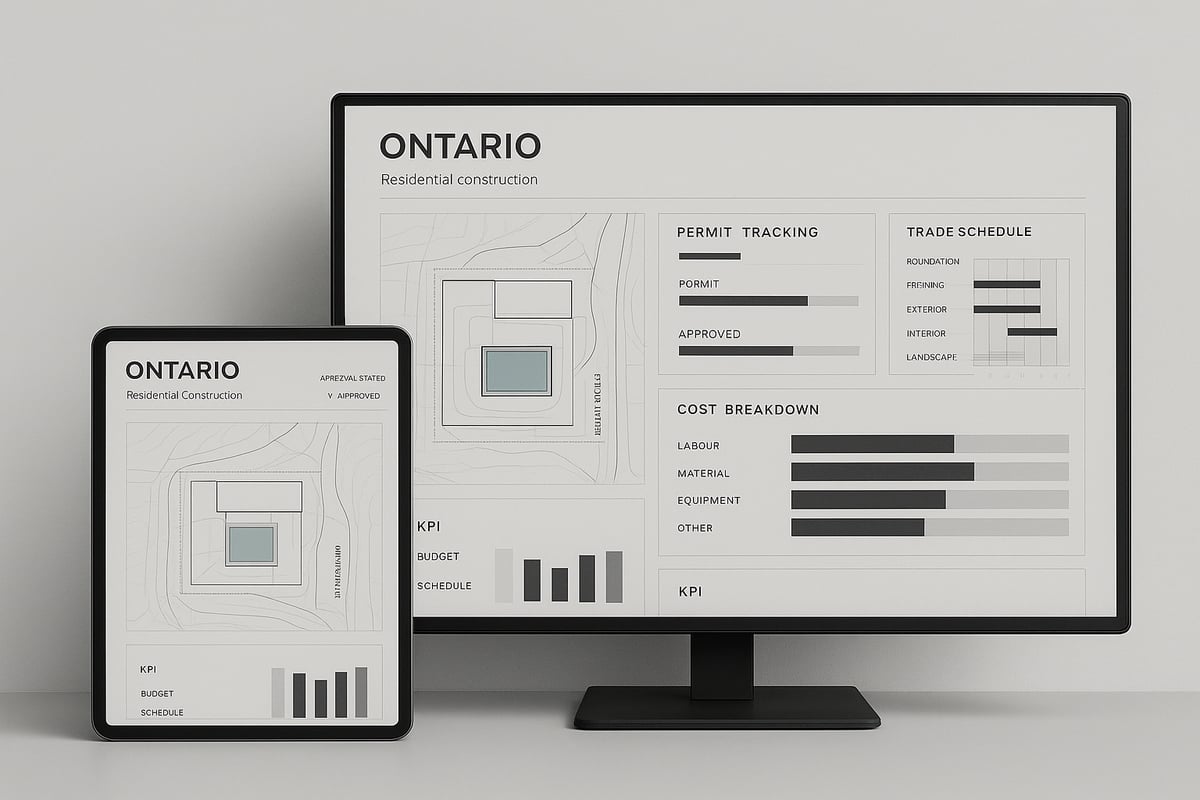
Effective dashboards track KPIs, budget variances, and milestones such as permit approvals or critical path tasks. This level of oversight empowers teams to prevent change orders, protect timelines, and deliver high-quality results that reflect Ontario’s stringent standards.
Ultimately, dashboard construction is not just a tool but an essential process for ensuring clarity, accountability, and premium outcomes in every project.
Achieving premium project outcomes in Ontario’s complex residential and outdoor construction sector demands more than traditional oversight. Dashboard construction gives homeowners, architects, and builders a clear, data-driven path to manage every phase, from design intent to final inspection. Here are seven essential tips to lead your 2026 projects with confidence.
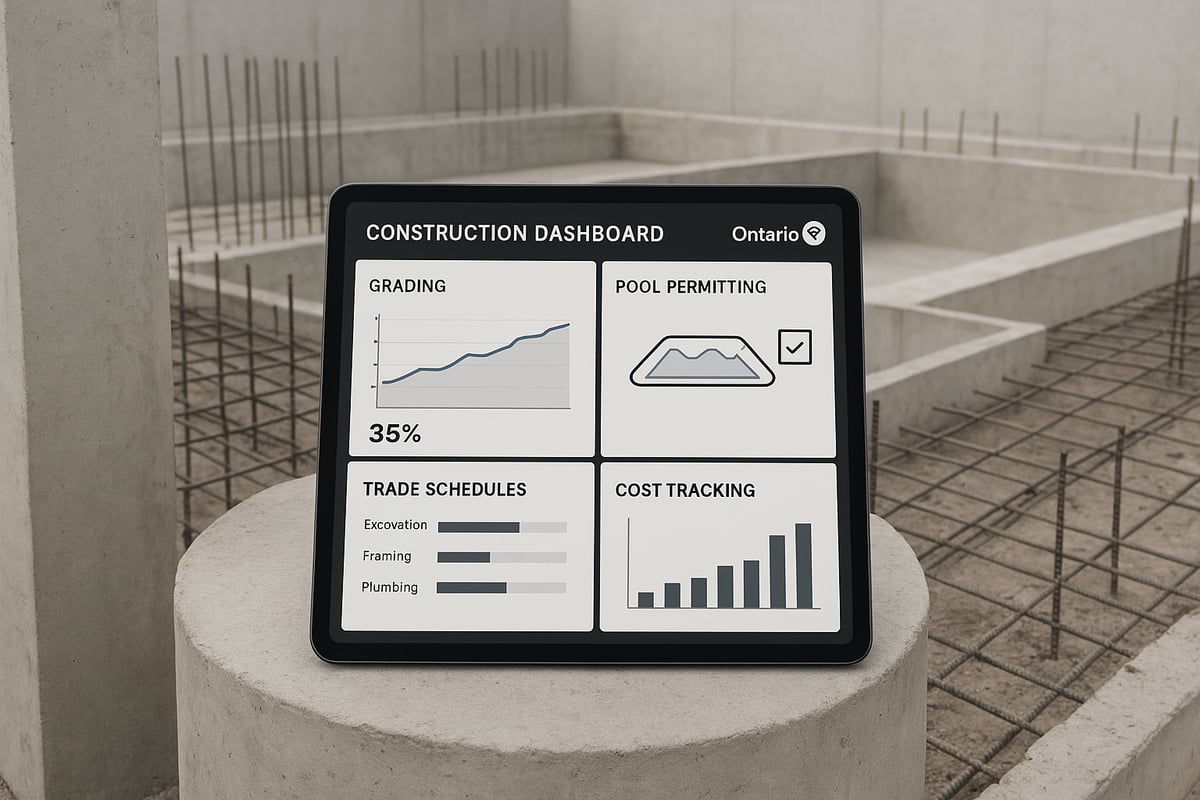
Start dashboard construction by bringing all stakeholders together early. Homeowners, architects, landscape designers, and trade partners each have unique priorities. By gathering input at the outset, you can ensure dashboard metrics reflect Ontario’s realities, such as grading requirements, pool safety, and zoning compliance.
Select KPIs that matter most: budget, schedule, permit status, and quality benchmarks. Competitor templates often feature assignment tables and milestone tracking, but a tailored approach is key. For example, a custom pool build dashboard tracks permit approval dates, excavation progress, and waterproofing milestones for clear accountability.
Consistency is the backbone of effective dashboard construction. Implement standardized digital forms for site conditions, daily logs, and trade progress. This approach reduces manual errors and streamlines communication across planning, tendering, and execution phases.
Unified templates make it easier to compare data and identify trends. Leading dashboards even integrate third-party sources, such as scheduling tools or site cameras, for richer insights. Using a single daily site report template ensures everyone is aligned and documentation is always up-to-date.
Linking cost tracking, payment schedules, and sequencing data within your dashboard construction process is vital for premium results. Visualizing dependencies, such as grading before pool shell installation, helps prevent costly delays and change orders.
Real-time budget variance and cash flow projections keep teams informed and proactive. Consider dashboards with planned versus actual progress, detailed cost breakdowns, and clear visualizations like bar or pie charts. For more on integrating financial insights, see Financial and project management insights.
Assign and monitor trade responsibilities, deadlines, and dependencies directly through your dashboard. Track the completion of critical inspections for pool steel, waterproofing, and landscape grading. Immediate alerts for missed steps allow for quick intervention and prevent rework.
Competitor dashboards excel at flagging high-risk issues and pending items, but a customized approach focused on Ontario’s construction standards is essential. For instance, a dashboard alert for a missed waterproofing inspection before backfilling a pool can save both time and resources.
Empower your team with mobile-friendly dashboard construction tools. On-site project managers, trades, and clients need instant access to updates, whether responding to weather delays, change orders, or by-law compliance concerns.
Mobile dashboards support photo uploads and document sharing directly from the field. Personalized, actionable views ensure every stakeholder sees relevant information. Notifications for permit approvals or trade schedule changes keep everyone in sync and projects on track.
Ontario’s permitting, grading, and pool safety regulations are unique and evolving. Customize your dashboard construction templates to reflect local requirements, including approval timelines, inspection checkpoints, and compliance documentation.
Dedicated dashboard sections for items like City of Toronto pool enclosure permits or final landscape grading certificates streamline project management. For more guidance on adapting dashboards for pool and landscape projects, explore Pools and landscape project best practices.
Harness historical dashboard construction data to improve future planning and risk mitigation. Analyzing trends in change orders, delays, and budget variances supports a culture of continuous improvement.
Set up alerts for deviations from planned milestones, enabling early intervention before issues escalate. Advanced analytics features, including predictive risk identification, give you the edge. For example, if dashboard analytics reveal most delays stem from late trade mobilization, you can adjust future sequencing for better outcomes.
A well-designed dashboard construction system is the backbone of premium project management in Ontario’s high-end landscape and pool sector. To ensure clarity, accountability, and successful delivery, your dashboard must be purpose-built for the region’s unique challenges.
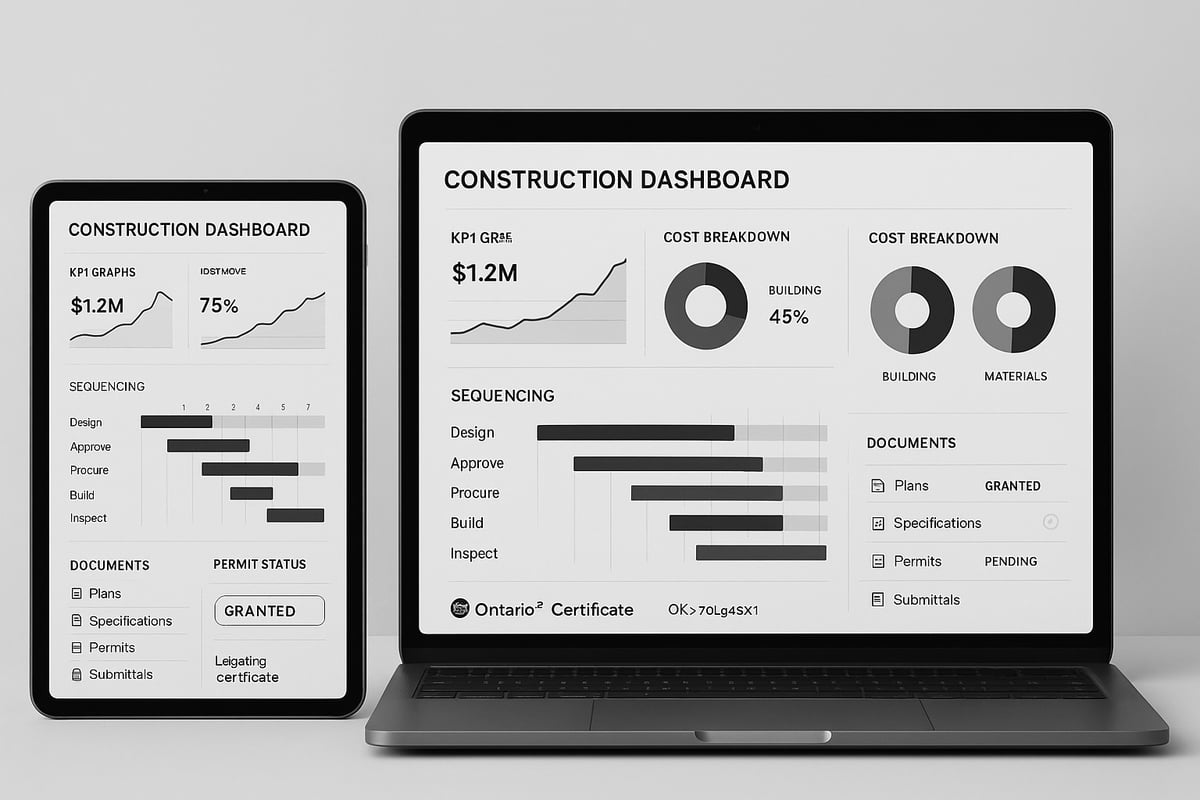
| Feature | Description | Ontario Example |
|---|---|---|
| KPI Tracking | Monitor essential metrics for progress and quality | Pool enclosure inspection status |
| Cost Breakdowns | Visualize budgets, variances, and cash flow | Grading certificate costs |
| Sequencing Charts | Map dependencies and critical path milestones | Landscape and pool installation sequencing |
| Document Management | Centralize permits, drawings, and change orders | City of Toronto permit logs |
Visual clarity is crucial. Use graphs, tables, and progress bars to make complex data accessible for all stakeholders. Integration with scheduling, budgeting, and permitting platforms eliminates information silos and keeps everyone aligned.
Customizable dashboard construction views allow homeowners, architects, and trades to focus on what matters most to them. For example, builders can monitor trade deadlines while owners track permit approvals, all within the same platform.
Leading solutions, as outlined in the Guide to Executive Project Dashboards, centralize analytics, highlight high-risk areas, and support proactive management. Ontario projects benefit from dedicated sections for grading documentation, pool safety compliance, and real-time change order tracking.
Ultimately, dashboard construction acts as the architect of your build process, protecting design intent and enabling premium results across every phase.
After exploring these essential dashboard tips, you can see how the right approach brings clarity and control to every stage of your construction project. Whether you're planning a custom pool, a landscape transformation, or a complete renovation, having a dashboard tailored to Ontario's unique requirements makes all the difference. At Solid Plan, we make sure every detail is managed with precision so you can feel confident in your project's direction and results. If you're ready to apply these insights to your next build or want expert guidance on dashboard-led project management, Book a Consultation to take the next step.